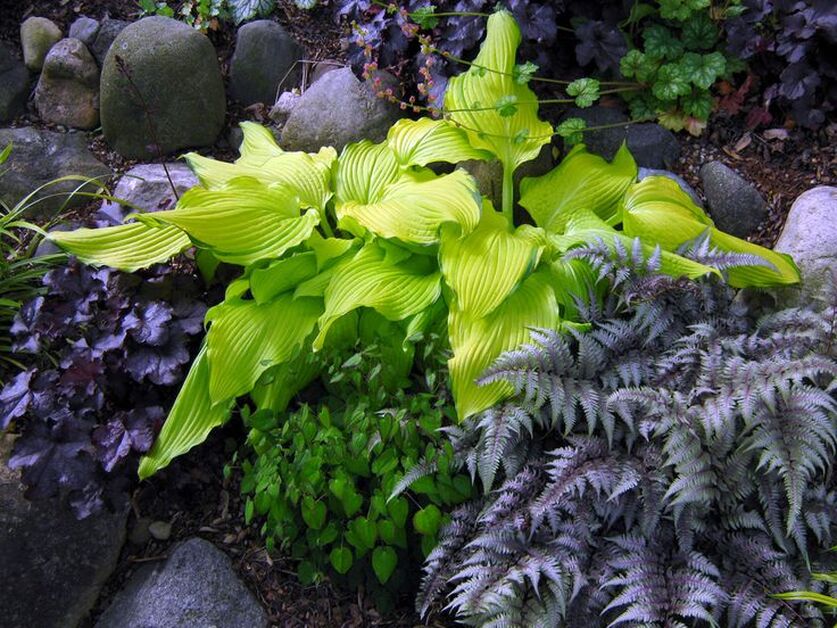
 ‘I must have flowers, always and always’ wrote Claude Monet. How many of us can’t identify with this sentiment? It’s the rose, the peony, the lily that make us catch our breath and stop to look twice. Isn’t that what we wait for all winter and spring? Planting annual flowers into containers to welcome us home every night or a garden bed filled with summer blooms give immense pleasure. Yes, like Monet we must always have flowers, yet there is something noteworthy and plausible about plants with terrific foliage. When the spring perennial flowers have faded, what makes the shade garden interesting? Hostas, Coral Bells (Heuchera), and ferns (especially Japanese Painted Ferns) carry us through summer and fall with variegated leaves, colorful foliage, and contrasting textures. Consider this: as perennials bloom their allotted times, some only a week or two, what do they look like when they are done flowering? How does that affect the look of that garden bed? And on an even broader scope, how does your landscape look when nothing is flowering? Adding a few perennials and shrubs with colorful and interesting foliage can take your garden from good to great design. After a quick poll of our staff at Burlington Garden Center, here are a few of our favorite foliage plants: 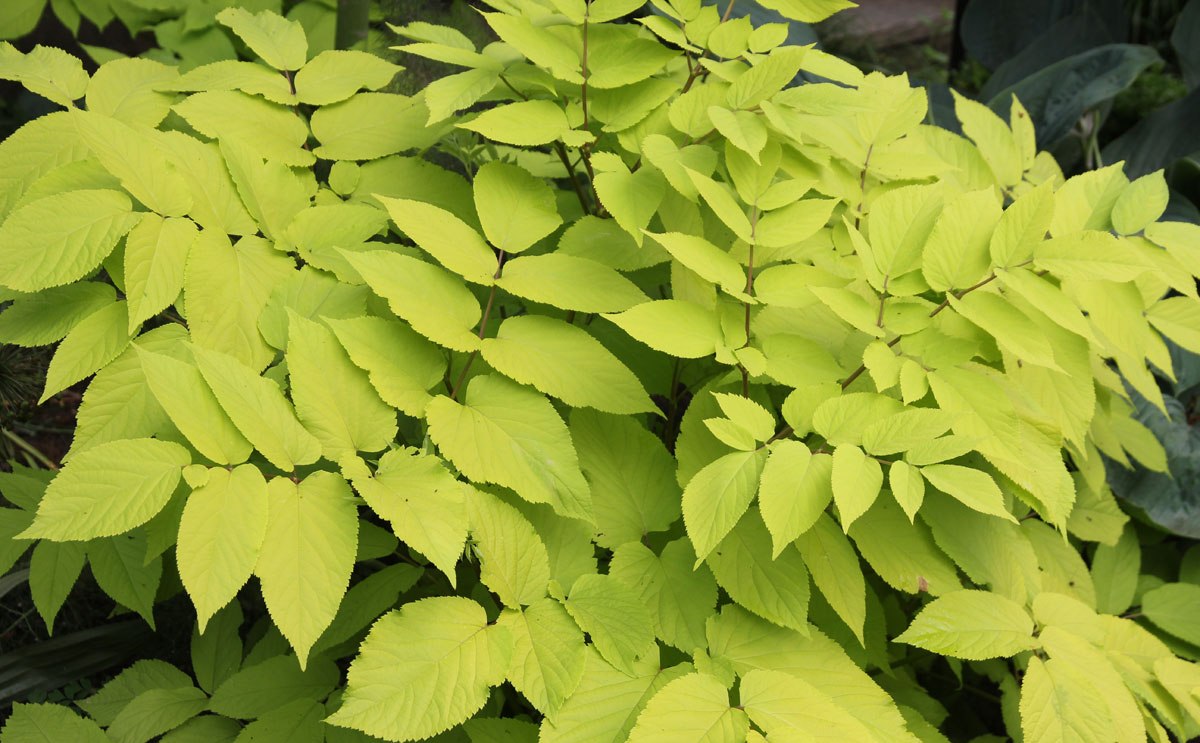 CHARTREUSE FOLIAGE Aralia cordata ‘Sun King’ (above) is definitely king in the part shade or shade garden. This herbaceous perennial (Spikenard) will quickly grow to 3’ tall in ideal situations and its broad leaves bring a bold chartreuse color among hostas and hydrangeas. Hakonechloa macra ‘Aureola’ is a fine-leaf grass for the shade garden. This Japanese Forest Grass cascades over boulders, softens front of the border, and pairs well with Hostas. For the sun garden, a splash of chartreuse foliage can be provided by Agastache ‘Golden Jubilee’ even when not topped with purple flowers often covered with bees. 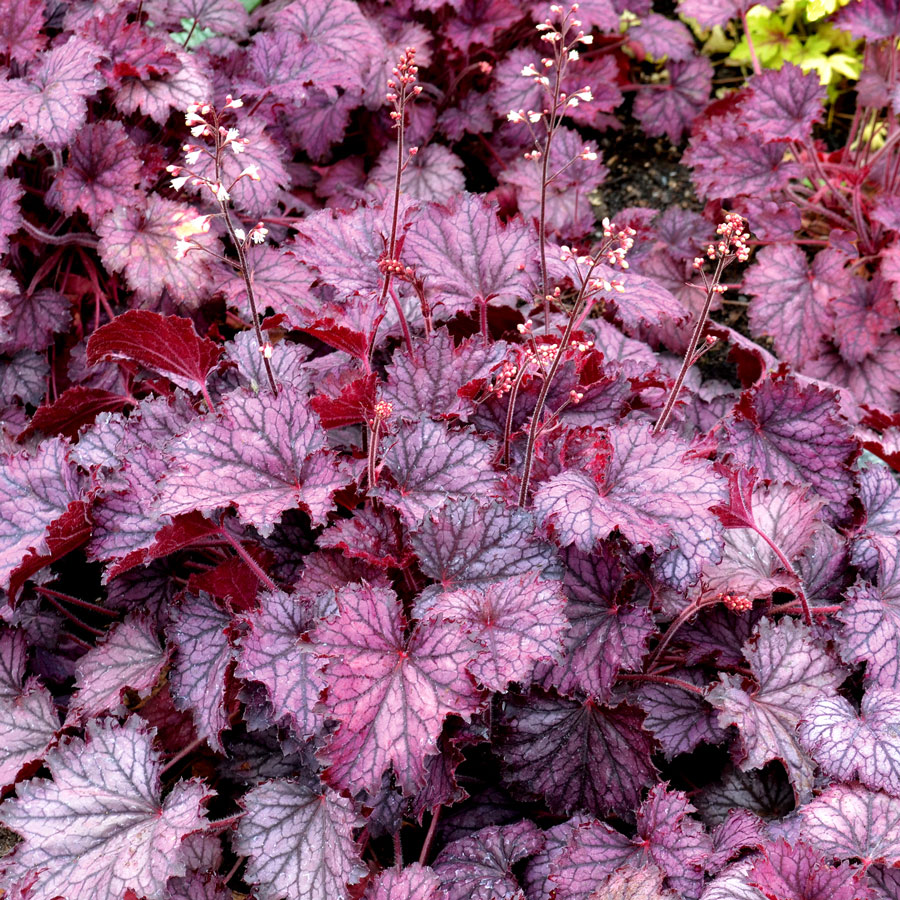 BURGUNDY FOLIAGE Hummingbirds aren’t the only ones that love Penstemon digitalis. The burgundy leaves of ‘Husker Red’ and ‘Pocahontas’ are a pretty contrast when planted near green-leaf perennials. The Ninebark family (Physocarpus opifolius) seems to add new members every year, and each with attractive foliage – from deep burgundy, to amber, gold and copper tones. With different mature sizes, there is sure to be one for your yard. Coral Bells (Heuchera), like the one shown above, certainly are a go-to foliage plant for part-sun/part-shade. Burgundy, purple, caramel, silver and shades of greens are all pretty additions to the garden as well as to containers. Heuchera ‘Mystic Rose’ and ‘Green Spice’ are reliable varieties to look for. 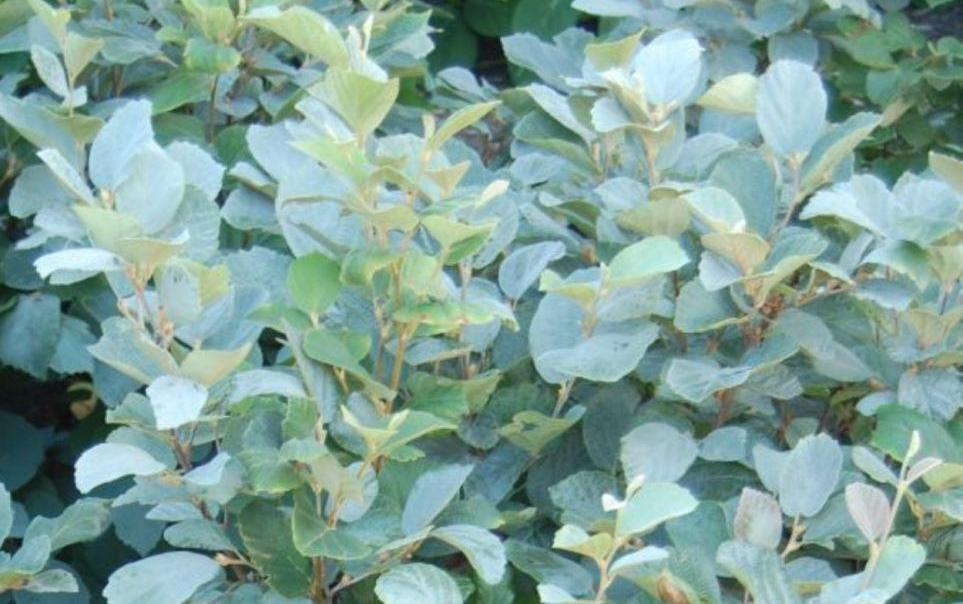 BLUE FOLIAGE Two plants with blue foliage combine well with that of burgundy-leaf plants: Fothergilla ‘Blue Shadow’ (above) is a medium size shrub for sun and part shade. With bottle-brush flowers in spring and beautiful red fall color, it adds interest to the landscape for three seasons. Several varieties of Hosta are easy-care perennials that bring the blues to shady gardens, too. 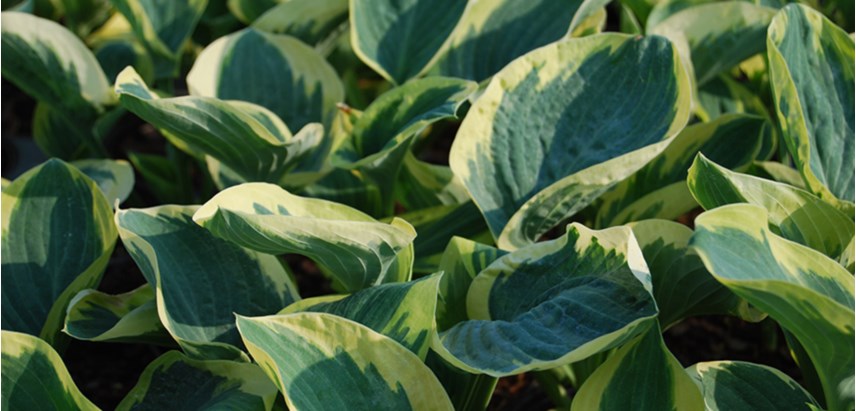 VARIEGATED FOLIAGE
Once again, it’s Hosta that provides foliage-interest in the shade. Never settle for plain green again! Endless combinations of white, green, blue, yellow, chartreuse make this plant family far from boring. Our last suggestion for the shade garden not only offers interesting green and white foliage, but a unique, gracefully arched habit. Variegated Solomon Seal, Polygonatum ‘Variegatum’, spreads by rhizomes and will create small colonies over time.
1 Comment
4/17/2019 2 Comments Growing Carrots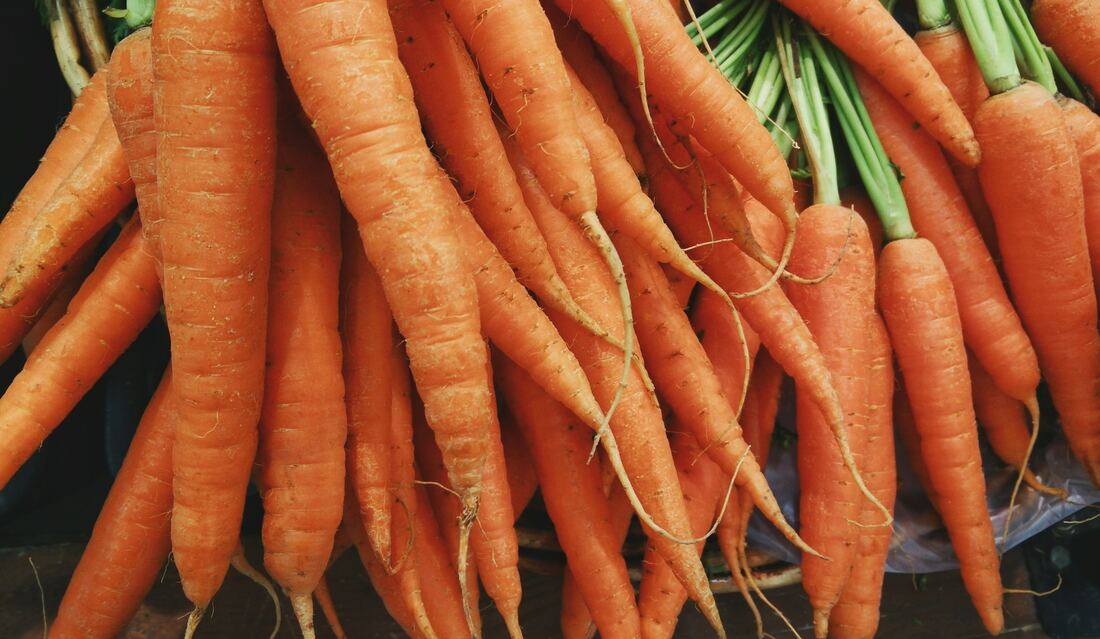 Growing carrots has it's challenges - especially with our clay soil. But knowing a few tips will help you grow them successfully. First thing to know is that they have a long germination period ranging from 10 to 20 days. It's best to sow the seed directly in the ground, and keeping the seed bed consistently moist is key for good germination. Covering them with burlap or a 1x4 board will help keep the soil moist (check daily and remove after two weeks or once the seedlings have emerged). Overseeding will help ensure a good crop (up to 10 seeds per inch), and thinning is a must (2 -4 inches apart) to allow each plant enough room to size up. Watch this video from Renee's Garden Seeds for helpful thinning tips: SOIL BED PREP This root crop will do best when planted in full sun (6-8 hours) and in soil that is well-drained. Sandy soil is ideal, but amending any soil type with compost and cultivated to a depth of 12 inches, should keep them happy. VARIETIES TO GROW Nantes and Danvers are probably the most well-known and both are heirlooms. Nantes are good for cooking and fresh eating, but the skin is thin so they do not store well. The flavor is sweet and can mature to 7" long, but they can be pulled early and eaten as baby carrots. Danvers is probably the most reliable in the garden. They grow to about 8", are good for cooking, not as sweet for fresh eating, but they store well. Just for fun, venture away from orange carrots and grow purple or red varieties. 'Purple Sun', 'Atomic Red', 'Cosmic Purple' are a few on our seed racks this year. New orange varieties in seed packets include 'Shin Kuroda (a short one)', and 'King Midas (long and sweet). If your soil is less than ideal and you've had trouble in the past getting carrots to develop, choose a short, round variety like 'Romeo'' or 'Shin Kuroda'. 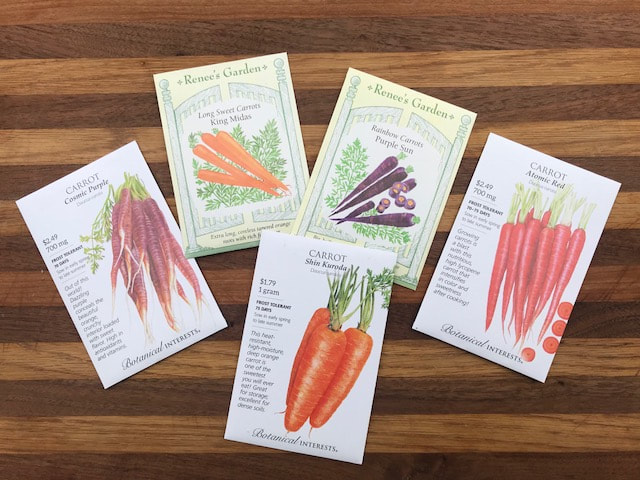 OTHER GROWING TIPS: * Mix seed half and half with sand and scatter randomly across the bed. * If this is your first time planting carrots, use seed tape. It has the tiny seeds evenly spaced on a biodegradable paper 'tape' and requires minimal thinning. * Sow carrot seeds beginning mid April, and continue to plant every 3 weeks through mid summer. 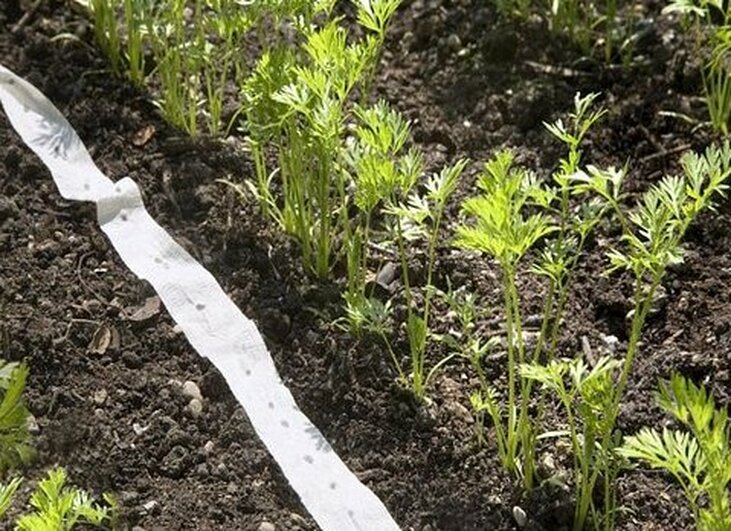 seed tape photo by Sheila Terry COMPANION PLANTING *Carrots grow well with salad greens and other root crops like radishes. *Onions and chives make good companions in the garden repel the carrot rust fly. *Marigolds, nasturtiums, chamomile and calendula planted nearby will attract beneficial insects. * Avoid planting carrots and dill together. Even though they taste good together in the kitchen, dill does no favors to the carrot in the garden. *Another foe to the carrot is the tomato. In fact, if your carrots have been stunted in the past, it could be from being planted too close to tomatoes which excrete a chemical in the soil that carrots don't like. 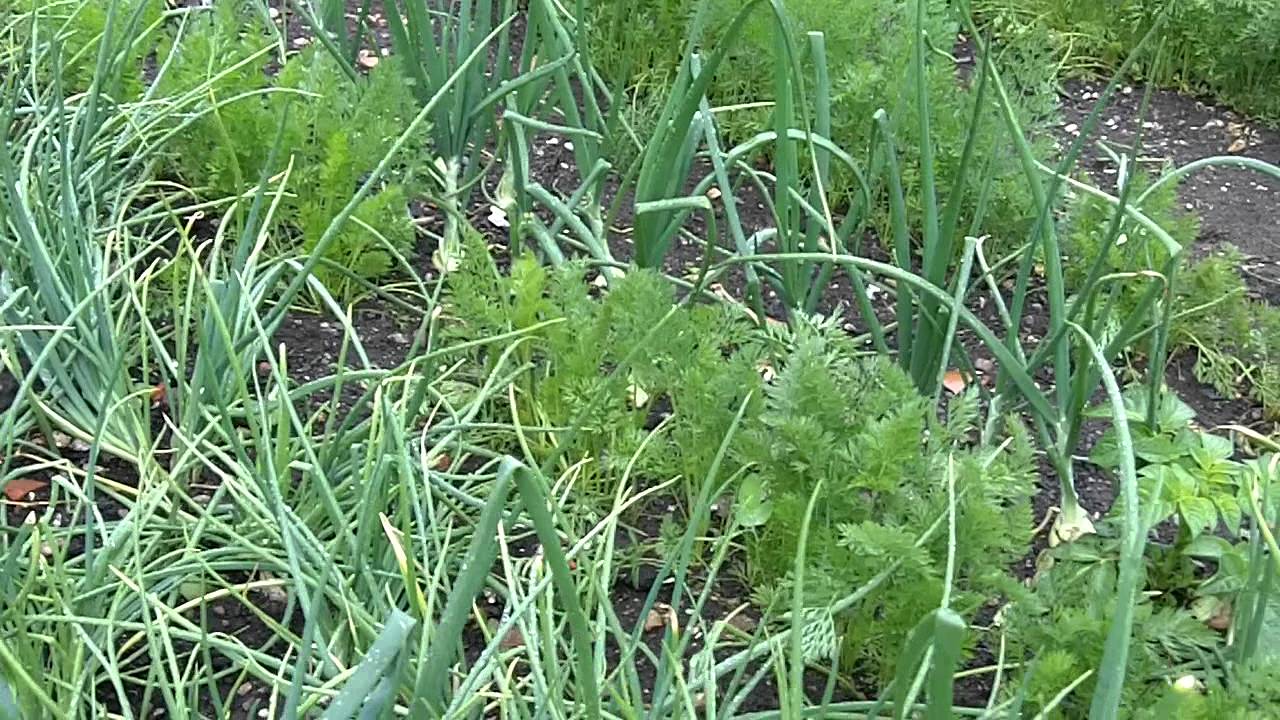 GROWING GIANT CARROTS For most gardeners, growing carrots is rewarding enough when the harvest is ready and we taste their homegrown sweetness. But for a few, the goal is to grow the longest or the heaviest carrot. Currently, the heaviest carrot was grown by Chris Qualley in Minnesota and weighed in at 22 lbs! It's pretty interesting to learn how these giant vegetables are grown. Click on this link - you may learn a few more tips on growing better carrots, or you may be inspired to grow your own giant veg.  4/11/2019 0 Comments Hip & Healthy Houseplants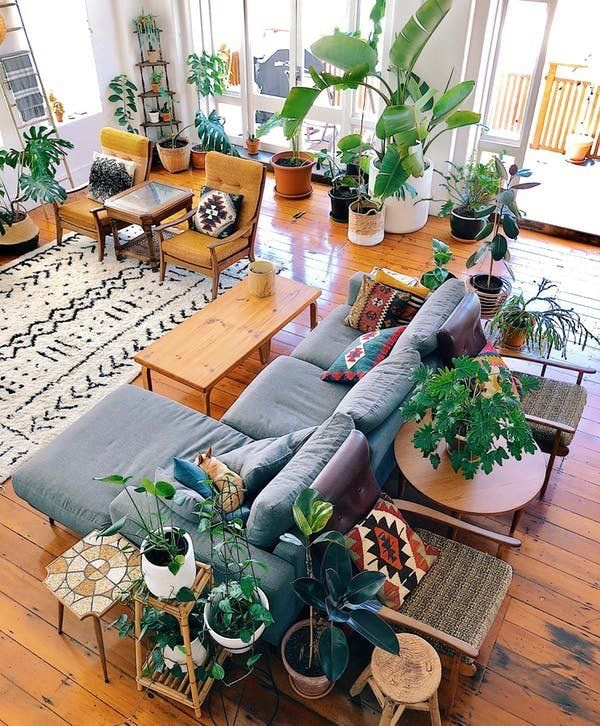 photo source: musely.com Houseplants are making a comeback and are becoming an important part of your indoor décor. Ditch the plastic pots and select stylish containers that reflect your personal style. Choose from ceramic, terra cotta, wood and metal to bring color and texture into your interior space. Don’t forget to use soil toppings like moss and stones for interest. Succulents are the easy-to-care-for choice for Millennials and even Generation Z. With minimal water requirements, just place them in a sunny location, and they virtually take care of themselves. Choose from various types of echeveria, cactus, agave, jade, aloe and more. 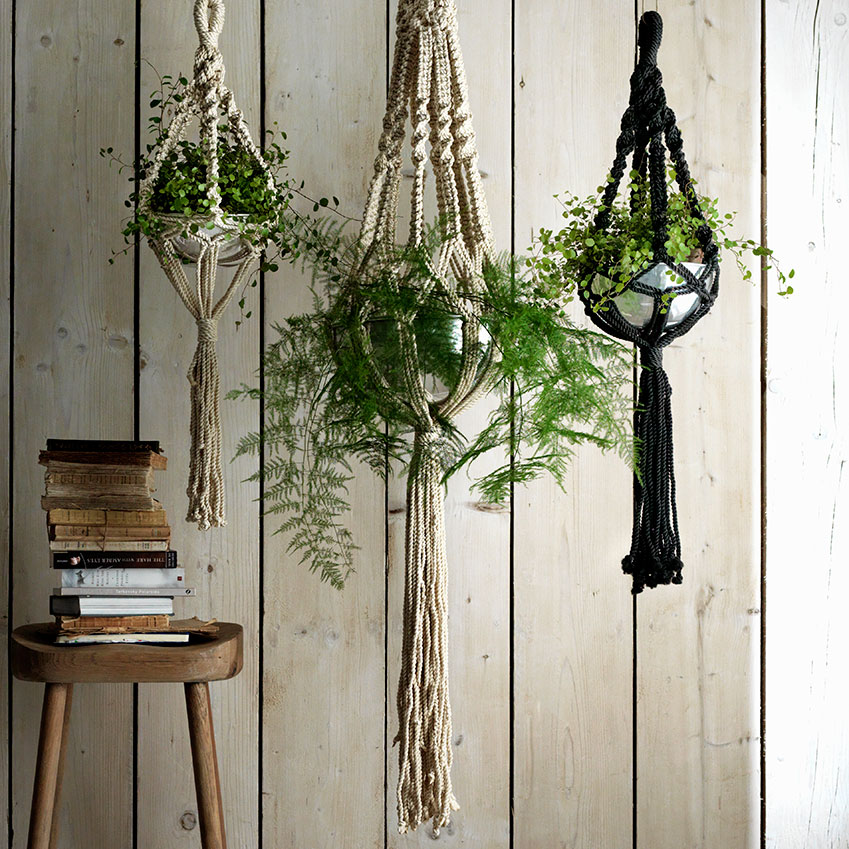 photo source:elledecoration.co.uk In addition to using trendy pots for your plants, hanging planters are back from the past. If you aren’t quite ready for that macramé hanger again, there are other varieties that use natural jute or metal chain for hanging. English Ivy, Heart-leaf Philodendron and Golden Pothos are great houseplants to hang. 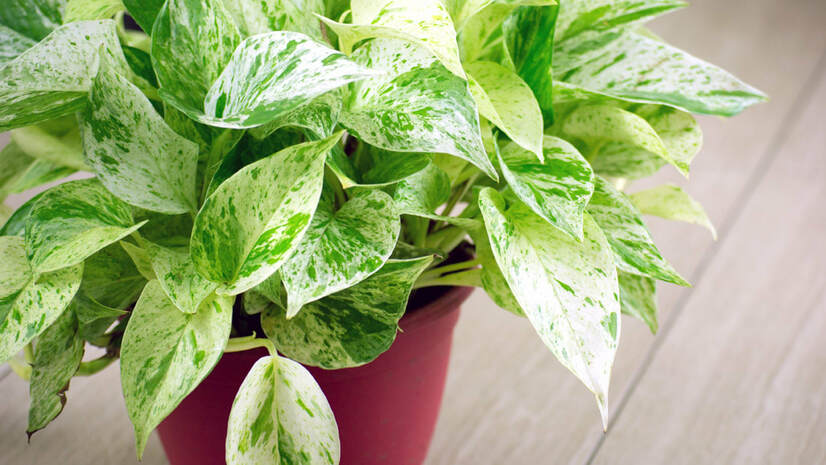 photo source:domesticsoul.com Houseplants that Purify the Air In the late '80s, NASA and the Associated Landscape Contractors of America studied houseplants as a way to purify the air in space facilities. They found several plants that filter out common volatile organic compounds (VOCs). Lucky for us, these plants can also help clean indoor air on Earth, which is typically far more polluted than outdoor air. Recommendation: 1 plant per 100 square feet in home. Aloe (Aloe vera) - Prefers sun and dry soil.
Spider plant (Chlorophytum comosum) – Pet Friendly Thrive in cool-to-average home temperatures and prefer dry soil. Bright indirect sunlight keeps them growing best. Gerbera daisy (Gerbera jamesonii) – Pet Friendly Needs at least six hours of direct sunlight every day. The brightly colored cut blooms can last as long as two weeks. Snake plant (Sansevieria trifasciata 'Laurentii') – “Mother-in-law’s tongue” Low light and dry out between waterings Golden pothos (Scindapsus aures) Needs bright, indirect light. Don't overwater or you'll end up with a case of root rot. Perfect plant for use in hanging pots. Red-edged dracaena (Dracaena marginata) Moderate sunlight – can eventually grow tall. English ivy (Hedera helix) Grows best with moist soil and four or more hours of direct sunlight each day. Great for putting in hanging pots. Chinese evergreen (Aglaonema Crispum) - they thrive in low light and will grow in places where other plants won't grow. They prefer slightly humid air. Heart leaf philodendron (Philodendron oxycardium) - They thrive with indirect light and very little maintenance. Great for hanging planter. Peace lily (Spathiphyllum) - Shade and weekly watering are all the peace lily needs to survive and produce blooms.  photo source: urbanturnip.com This spring we're focusing on being rooted in wellness. It's been energizing to discover the connection between gardening and wellness. Last Saturday, March 30, we delved into the seven areas of wellness and discussed how gardening fulfills each of those seven aspects of being healthy in mind and body: -physical, emotional, social, intellectual, spiritual, environmental, and occupational. For those of you who were at that presentation, we asked you to fill in this blank: 'I garden, therefore I am more ______. As recent studies have shown, most of us do not garden to save money, but rather for it's emotional benefits. What a pleasure to hear your answers:'I garden, therefore I am more . . . 'at peace', 'centered', 'fulfilled', 'rooted'. Yes! This is why we garden! Yes, gardening can help fight depression. Yes, getting your hands in the soil can boost not only your mood, but also your immune system. And yes, gardening keeps us mindful and present in the moment. Last Saturday, we also shared a few of our favorite feeds, apps, and blogs that inspire us. We share them again here with the hopes to inspire you to get excited about gardening - whether you're growing your own food, planting a container of herbs or flowers, or decorating your home with houseplants and succulents. 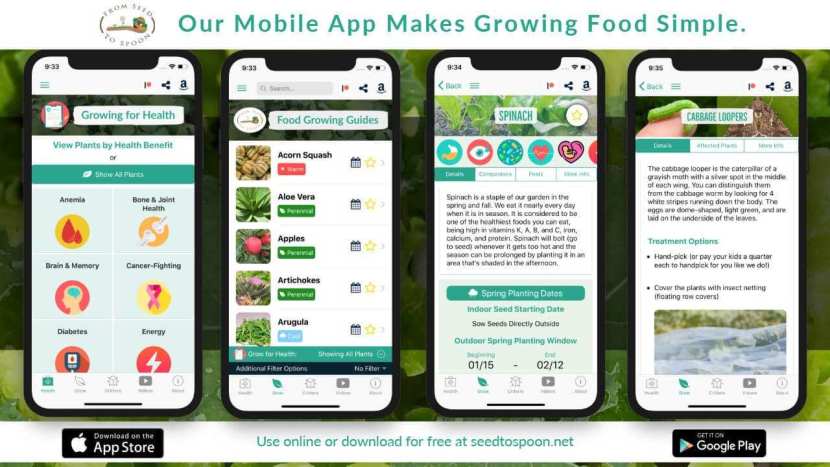 For those of you who grow your own food, particularly growing for the health of it, this app FROM SEED TO SPOON,is such a must. It helps you discover which vegetables, fruits, and herbs are good for whatever health problem you are dealing with: anemia, bone & joint health, brain & memory, cancer-fighting, energy, GI health, heart health, inflammation & pain, thyroid, and more. Not only does it list plants to grow for each area listed above, but it tells you how to grow them. Learn more about this app here.  A Way to Garden with Margaret Roach is an award-winning website, blog, and podcast. We've been following her for years and every week learn something new. Lately Margaret has been interviewing specialists in each horticulture field which is always interesting to get advice from those who grow for a living! You'll find a wealth of information on her website here. *  Epic Gardening is a newer find for me and I am enjoying Kevin Espiritu's daily podcasts. A young California gardener, his focus is urban farming, hydroponics, aquaponics, houseplants, and battling garden pests and diseases naturally. Knowledgeable and enthusiastic about gardening. you'll find Epic Gardening here as well as on YouTube, Instagram, podcasts, and Facebook. * 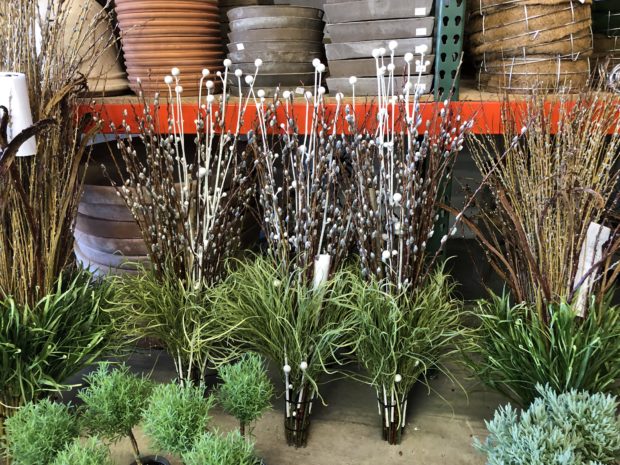 One of the most inspiring blogs on container gardening is written by Deborah Silver, owner of Detroit Garden Works. On her blog, Dirt Simple, she shares an honest and open look at how they construct their seasonal container plantings they create for upscale homeowners in the surrounding Detroit area. Discover her unique style here on her website. * 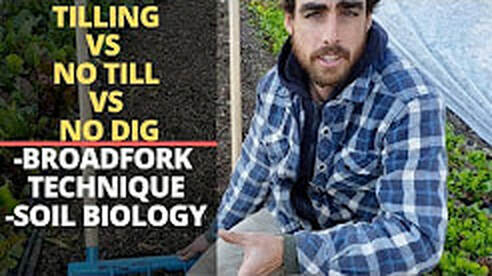 And finally, a new one I came across this morning. Nature's Always Right is the blog/podcast of another young urban farmer in San Diego, California who has a ton of how-to videos on YouTube. I'm just fascinated with these young people who are growing for markets and finding ways to do it naturally. It's refreshing and exciting. Hope you'll take the time to look him up as well as a few of the others.
Until next time, join us on Instagram @btowngardens and on Facebook. Keep growing! Tracy Hankwitz Burlington Garden Center General Manager & Horticulturist 3/26/2019 3 Comments A Rainbow of NasturtiumsNasturtiums have a lot of good things going for them: easy to grow, undemanding, rabbit and deer tolerant, attract hummingbirds, come in a rainbow of colors, and they are edible. They can be categorized as either mounding Nasturtiums or climbing Nasturtiums. Most fall into the mounding category, growing 10-12" tall and similar spread, although some varieties can spread 2-3 feet. Ranging from the creamy flowers of 'Vanilla Berry' to the rich ruby of 'Black Velvet', how can you only choose one to grow? We certainly couldn't. That's why we have over a dozen varieties on our seed rack this spring. Here are a few of them: 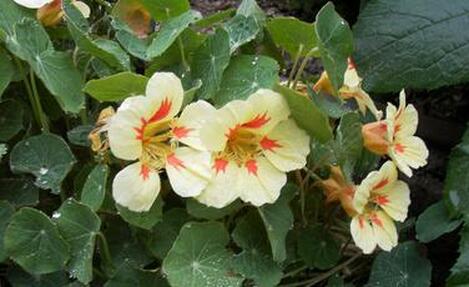 'Vanilla Berry' (photo source: reneesgarden.com) 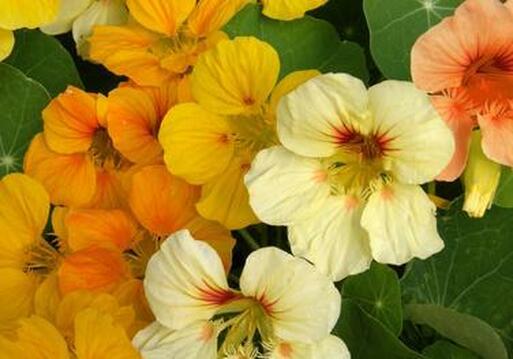 'Cup of Sun' (photo source: reneesgarden.com) 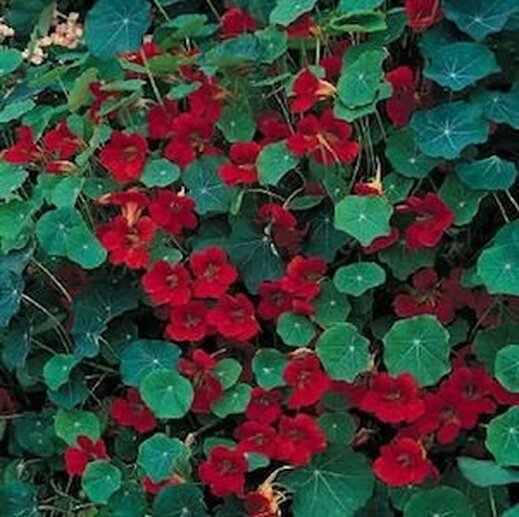 'Mahogany' 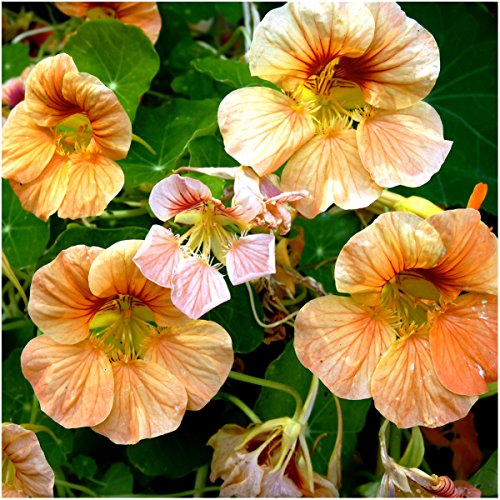 'Peach Melba' 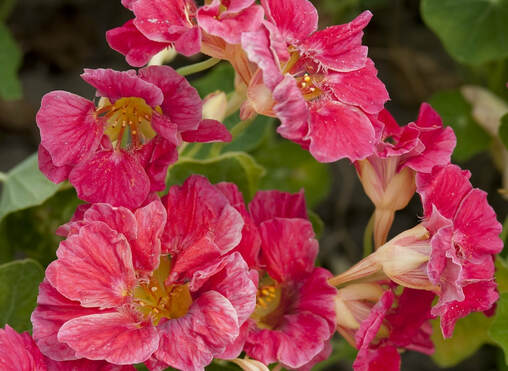 'Cherry Rose Jewel' (photo source: theenglishgarden.com) 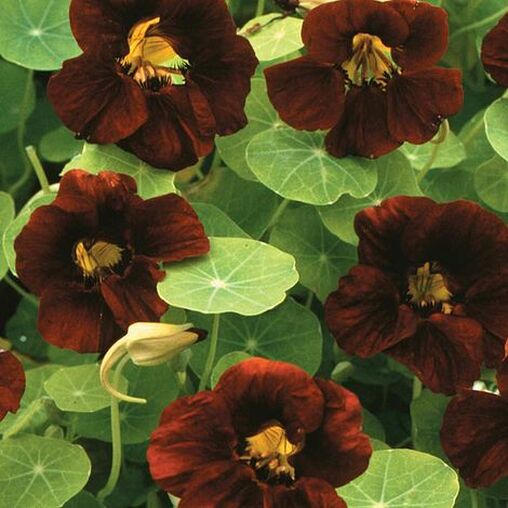 'Black Velvet' (photo source: thompsonmorgan.com) * Two heirloom Nasturtiums of note that are on our seed racks this year: 'Scarlet Gleam' has a semi-trailing habit making its brilliant red flowers perfect for hanging baskets and containers. 'Empress of India' is one of the oldest Nasturtiums known to exist. This prolific heirloom produces deep crimson flowers and has blue-green foliage. 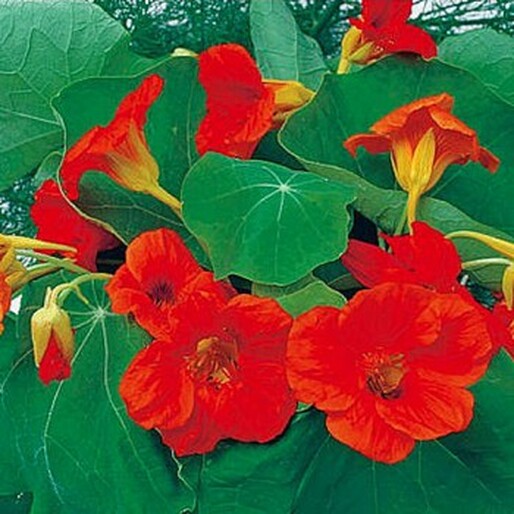 'Scarlet Gleam' (photo source: 123seeds.com) 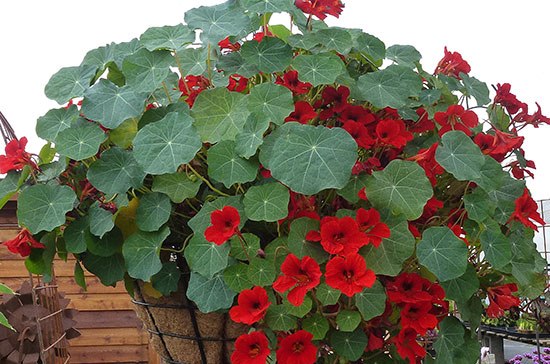 'Empress of India' Finally, the climbers. Imagine these lovely, edible flowers clamoring up a trellis or spilling over a wall. 'Moonlight' bears soft yellow blossoms on twining vines and lily pad-shaped leaves. Another climber is 'Spitfire' with scarlet-red flowers that are a beacon for hungry hummingbirds. Both varieties grow 4-6 feet tall and can be trained to climb up short trellises. Use loose ties to get them started. 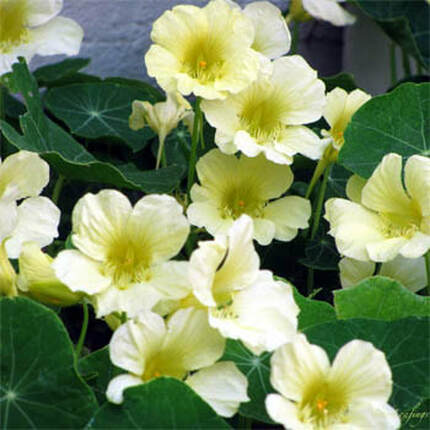 'Moonlight' (outsidepride.com) 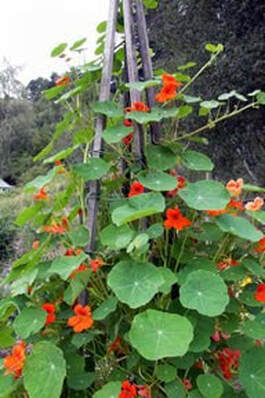 'Spitfire' GROWING TIPS: Nasturtium are easy to grow from seed which are odd-looking large seeds with a hard seed coat. They can take 7-14 days to germinate, so nicking them and soaking them in luke-warm water overnight will speed things up. It's best to sow the seed directly in the ground 1-2 weeks after the last average frost. Although not recommended, seeds can be started indoors 2-4 weeks before the last frost. Sow in biodegradable pots that can be directly planted in the ground. Plant in full sun or part shade and give them minimal care. They thrive on neglect! They also have beneficial properties in the garden making them good companions for zucchini and other squashes. 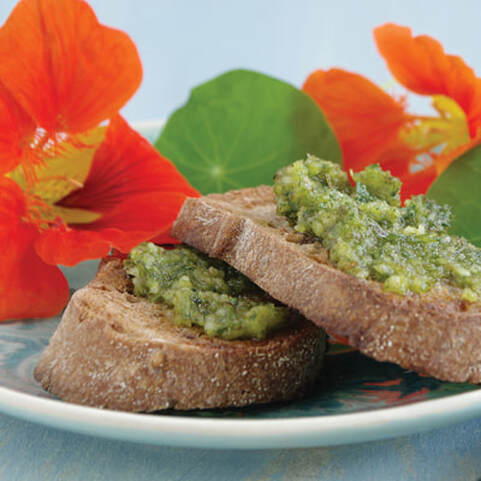 One of the best features of Nasturtiums is that they are edible. The flowers' peppery flavor and the spicy, watercress-taste of the leaves are a welcome addition to fresh salads and sandwiches. Or use them in this pesto recipe from one of our favorite seed growers Botanical Interests.
NASTURTIUM PESTO 1 cup packed nasturtium leaves and stems, washed and dried 15–20 basil leaves 4 garlic cloves ½ cup pine nuts, lightly toasted ½ cup or more of extra virgin olive oil ½ cup Parmesan cheese, grated ½ teaspoon salt ½ tablespoon lemon juice Directions: Add all ingredients to a food processor or blender and blend until smooth, scraping the sides periodically to fully incorporate ingredients. Add more olive oil for desired consistency. 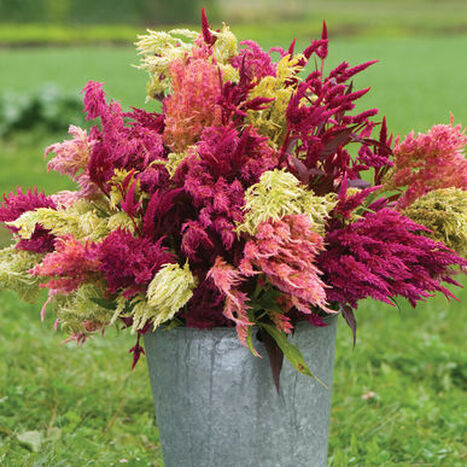 Mid-March signals the beginning of the seed sowing season. Our seed racks are full of varieties ready to grow in your garden and produce a bounty of vegetables, herbs, and flowers. Following are a few of our favorite flower varieties new to BGC this year: One that has caught our eye is Pampas Plume Celosia (shown above). Masses of soft, feathery, 2-6" long plumes in scarlet, orange, bright yellow, pink, cream. Multi-branching plants produce 10-14 stems each. Vigorous and free flowering. They thrive in hot and dry conditions. Start seeds 4-6 weeks before the average last frost (May 20), then plant in full sun. They are a long-lasting cut flower growing 36-48" tall and can be dried for later use. * 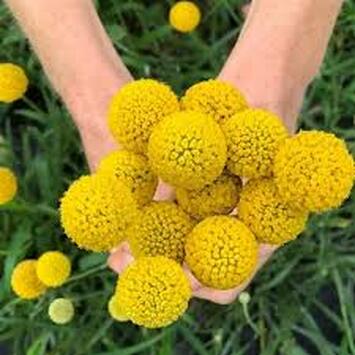 photo source: fruitionseeds.com Sun Ball Craspedia is another flower that thrives in hot, dry situations. This florist favorite adds whimsy to the garden with clusters of mustard-yellow orbs. Use in cut and dried arrangements. Also known as drumstick flower and Billy buttons. Start seeds indoors 6-8 weeks before the average last frost. Sun Ball will grow 24-30" tall. * 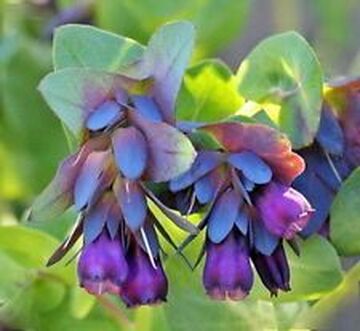 photo source: pinterest.com Once popular in the 16th century England, Purple Tear Honeywort is making a comeback. It's violet and blue flower bracts are gorgeous in cut flower arrangements and last a long time. In the garden, it is tough and handles hot, dry conditions with ease. The bees and hummingbirds will flock to it. Start indoors 4-6 weeks before the last frost. Grows 16-32 inches tall in full sun. * 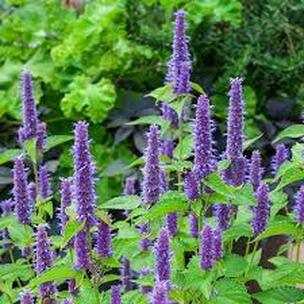 Lavender Hyssop, also known as anise hyssop, is an heirloom and native to the midwest. It is the 2019 Herb of the Year because of its usefulness in the kitchen and in the garden. Loved by hummingbirds, bees, and butterflies, it will grow up to 48" tall. Use it in floral arrangements, as a tea, or add the flowers to salads. Why not grow this one from seed and have a garden full ? Start them indoors 4-6 weeks before the last frost. * 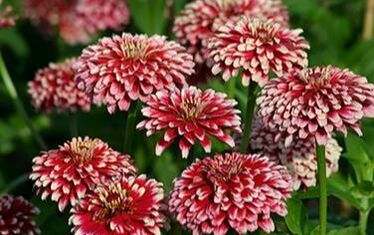 photo source: reneesgarden.com Zinnias come in almost every color imaginable, but 'Summer Pinwheels' stands out with it's bi-colored petals.
This showy zinnia has double blossoms and flowers heavily to dance nonstop all season long. Grows 3–3 1/2 feet tall. Butterflies of all kinds and many other pollinators flock to them for their plentiful nectar and pollen. Best to start this one directly in the ground after the last frost. Enjoy them even longer as a cut flower. 3/12/2019 4 Comments A Few New to Sow & Grow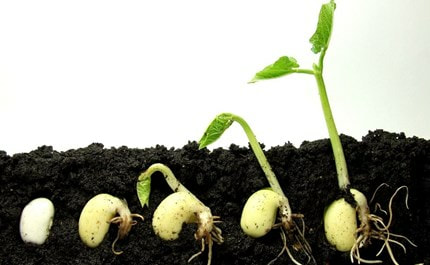 'Though I do not believe that a plant will spring up where no seed has been, I have great faith in a seed . . .' -Henry David Thoreau Mid-March signals the beginning of the seed sowing season. Our seed racks are full of varieties ready to grow in your garden and produce a bounty of vegetables, herbs, and flowers. Following are a few of our favorite vegetable varieties new to BGC this year: 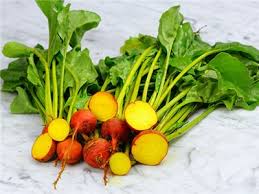 photo source: johnnyseeds.com Though yellow beets are nothing new in the vegetable garden, 'Golden Boy' Beets are worthy of a mention. 'Golden Boy's yellow-orange flesh is packed with vitamin A, vitamin C, beta-carotene, fiber, and iron to name a few. It has a mild flavor and won't stain like the red beets. The dark green leaves can be eaten when young and tender, and up to one-third of the outer leaves can be harvested without damaging the growth of the beet. Start in ground 2-4 weeks before the average last frost date. Sow again in late summer for a better harvest in the fall. *  Two sweet corn varieties have caught our attention: 'Painted Hill' and 'Martian Jewels'. 'Painted Hill' is a cross between Indian corn and sweet corn ('Painted Mountain' x 'Luther Hill'). The color is pale when eaten fresh and has an old-time sweet corn flavor. The coloration intensifies if left to dry. With it's roots in the Rocky Mountains, 'Painted Hill' is adapted to our short growing season and will germinate in cool, wet soils which is an added bonus. * 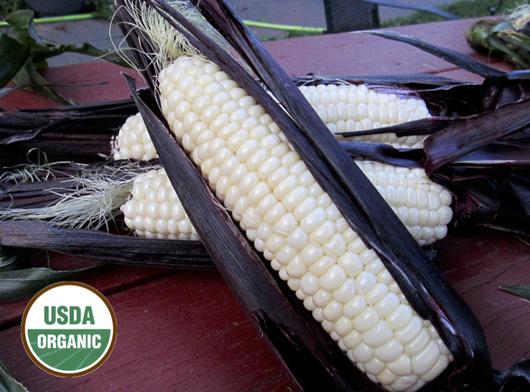 photo source: prairieroadorganic.co What makes 'Martian Jewels' sweet corn so special? This open-pollinated variety has Native American Hopi blue corn as a parent and is loaded with antioxidants. The violet-colored husks envelope creamy white kernels that have a sweet flavor. If ears are left longer on the plant before harvesting, the sugar subsides and the corn is perfect for bread and chowder. Dried kernels can be used for flour. Read here for more tips on growing corn. * 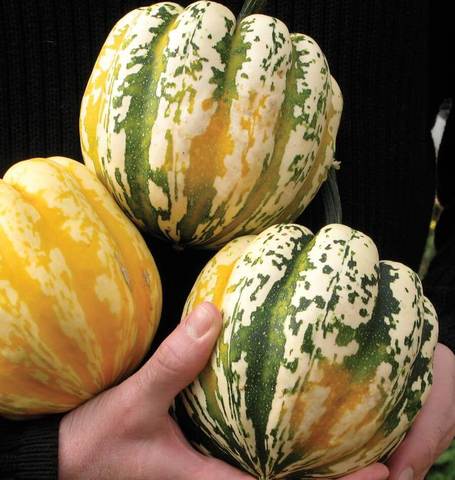 photo source: westcoastseeds.com 'Festival' acorn squash is as pretty as it is tasty. The 1-2 lb size is perfect for an individual serving. Plants are more compact than other acorn squash varieties and are heavy producers. 'Festival' will keep its flavor up to three months after harvesting. Learn more about growing squash here. * 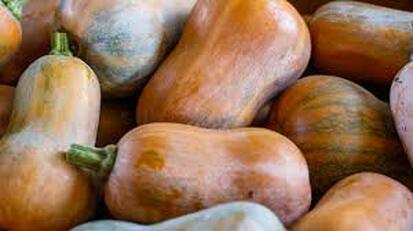 photosoure: tasteofhome.com Caution: The description on the seed packet of 'Honeynut' winter squash may leave you drooling. This miniature butternut squash is a recent introduction from Cornell University. Bred specifically for the farm-to-table movement, the challenge was to create a personal-size butternut squash that had amazingly sweet flavor. After 6 years of trialing, a cross between butternut and buttercup successfully produced 'Honeynut'. The plump 4-5" fruits will signal when ready to harvest by changing from green to terra cotta. The plants also boast resistance to powdery mildew and squash-vine borer. * 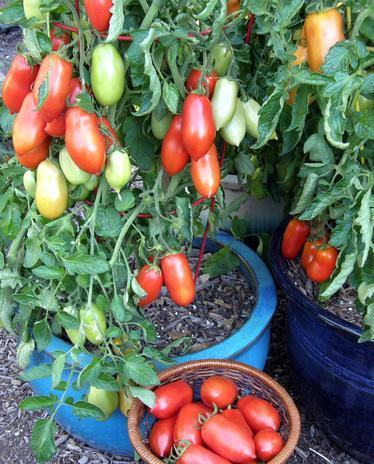 photo source: reneesgarden.com 'Inca Jewels' roma tomato is a Renee's Garden Seed exclusive. It was bred to be highly productive and suitable to grow in containers (tops out at about 3 feet). The juicy, delicious fruits are great for sauce or on the grill. Learn more about growing tomatoes in containers here.
3/5/2019 5 Comments Raised Row Gardening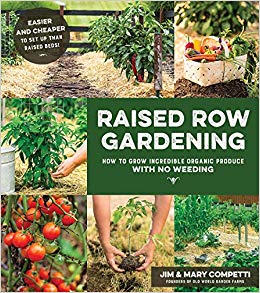 Do you want to grow incredible vegetables with no tilling and with minimal weeding? Is it possible to create a low-maintenance vegetable garden? Wouldn't it be great if it became easier to maintain with each successive growing season?
From all the various methods of gardening - traditional in-ground, straw bales, raised beds, pallets, and containers - comes a new (but actually old) way to garden: raised row gardening. Is your interest piqued? Jim and Mary Competti , owners of Old World Garden Farms in Ohio, began to experiment with raised row gardening a few years ago because they didn't have time or money to have a vegetable garden but wanted to grow their own food. The first year resulted in a bountiful harvest. They are such believers in this method that they wrote a book about it. The basics are simple: mulch walking paths heavily and mound the growing rows at least 6 inches high with compost and topsoil and organic matter. To learn more, read the Four Part Series on their website, or get all the details in their book Raised Row Gardening. And you guessed it, we have it here at BGC. Pick up your copy today and start planning! 3/3/2019 1 Comment Why Start Plants from Seed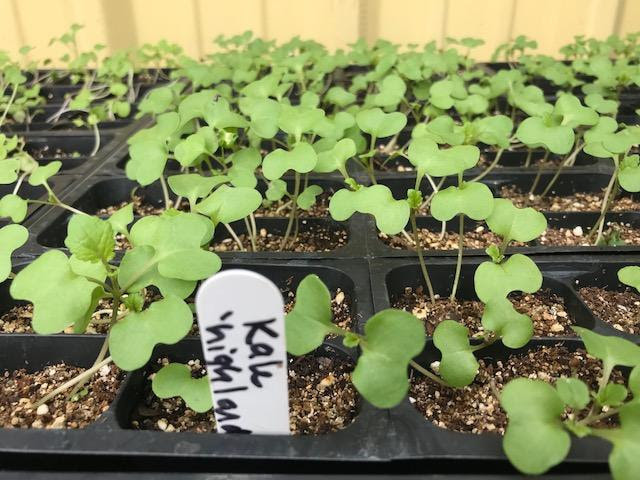 What a February it has been! We've experienced just about everything that Winter can throw at us - frigid cold, snowy days, 80 degree temperature swings, and ice storms. Spring can come anytime now! Starting plants from seed is a great way to shake off those winter blues and get a jump on the season. Not only do seedlings get a head start, but you have access to growing thousands of varieties of vegetables and flowers that you can't buy as plants. It's also the most affordable way to fill a garden. Before you get crazy with sowing seeds, it's important to know when to start each variety. Knowing the average last frost date is key when planning. In our area, that date is May 20. Use the information on the back of the seed packet to count back the number of weeks from May 20 to determine when to sow. 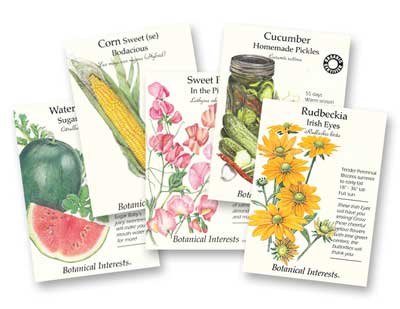 Seeds can be started in any type of container that has drainage, but we recommend setting yourself up right for the best success. Cell trays, seed flats, and dome covers work well and can be used from year to year. 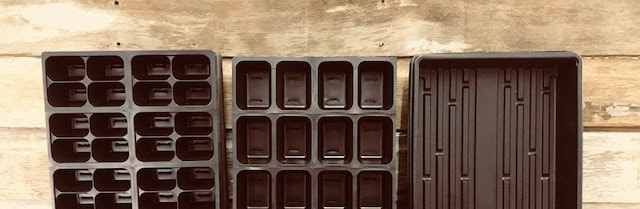 Having a written record of your seed sowing adventures can be helpful. A notebook works well, or click on the link below to download a free garden journal.
Free Garden Journal to Download You'll need a few other things to get started off right: grow lights, a heat mat, and a plant mister. But most important is the medium in which to grow the seeds. Use a seed starting soil-less mix for the best results. We recommend HSU germination mix - it's organic and comes from the HSU Ginseng Farm here in Wisconsin. Two final tips: pre-moisten the soil before sowing the seed, and use vermiculite to cover the seedlings. Vermiculite is light weight yet helps keep the soil and seeds damp. If you have questions related to starting plants from seed, just ask us! We're here to help. 2/5/2019 0 Comments Award-Winning Plants for 2019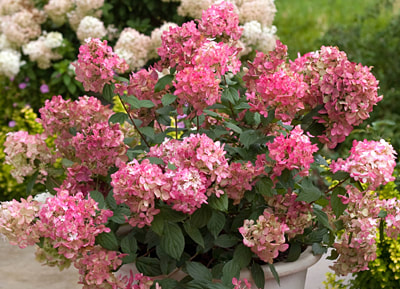 Hydrangea 'Firelight' Winter is the perfect time to think about spring, the garden, and new plants to add to your mix. But how does one choose from all the varieties that are available? First and for most, consider your light conditions – not only is it sun or shade, but when is it sunny? Morning sun is very different from afternoon sun which is very different from all-day sun. Then I suggest looking to plants that are long-flowering or strong performers in the garden. The best place to look is at the lists of award-winning plants. Following are this year’s winners. 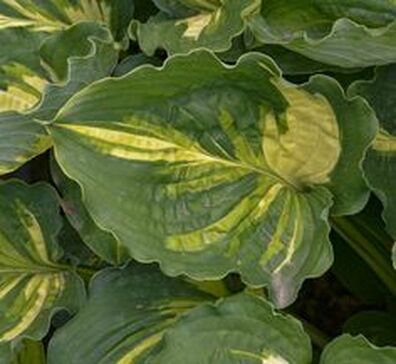 Hosta 'Lakeside Paisley Print' HOSTA OF THE YEAR Those of you with shade gardens may be tired of hostas, but this year’s winner is worth taking a look at. ‘Lakeside Paisley Print’ not only is the Hosta of the Year, it also won the popularity vote among the American Hosta Society members, which means it is loved by everyone. Maybe it’s the dark green, wavy, heart-shaped leaves with the interesting feathery pattern of cream that’s so alluring. This medium- size hosta grows 10” tall and 20” wide and does well in part sun to shady conditions. 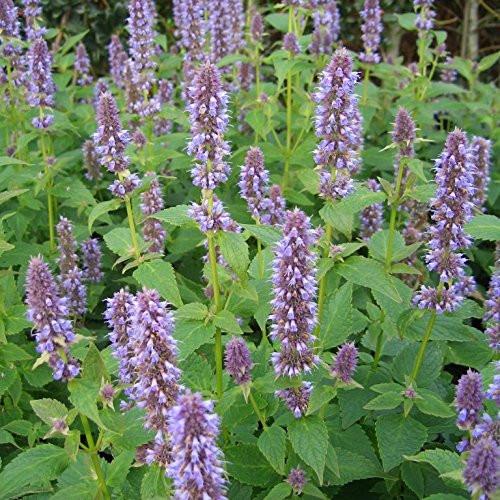 Agastache foeniculum 'Anise Hyssop' HERB OF THE YEAR For years the Herb Society of America has selected an herb of the year, and this year is no different. Agastache takes top honors in 2019 which some would say is long overdue. Agastache foeniculum (also known as anise hyssop) is part of the mint family and is most often used in herbal teas. The leaves have a licorice/anise flavor with hints of basil. This is one herb that should be allowed to flower. Not only are the flowers edible, but the long candles of florets attract bees and other pollinators. Although it is hardy here in Wisconsin, it is considered to be a short-lived perennial, but worth planting if it doesn’t reseed. 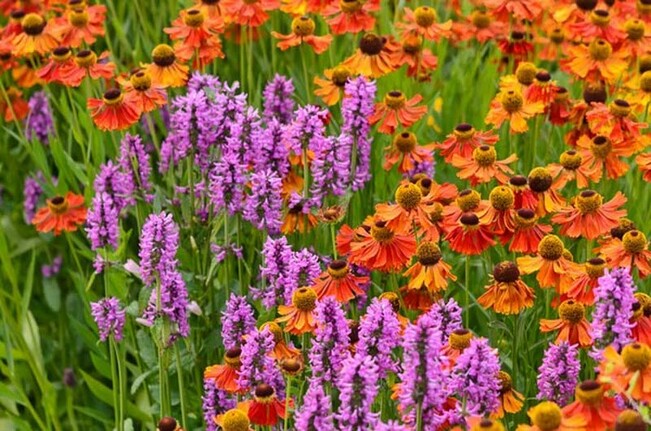 Stachys 'Hummelo' with Helenium 'Mardi Gras'- photo source gardenia.net PERENNIAL OF THE YEAR It’s always exciting to see which perennial is chosen by the members of the Perennial Plant Association. This year’s is a darling in the full-sun to part-shade garden – Stachys ‘Hummelo’. It’s pretty magenta wands dance above compact mounds of attractive foliage. And though deer find it distasteful, pollinators find it irresistible. ‘Hummelo’ looks best when planted in drifts with ornamental grasses, Echinacea and Helenium. 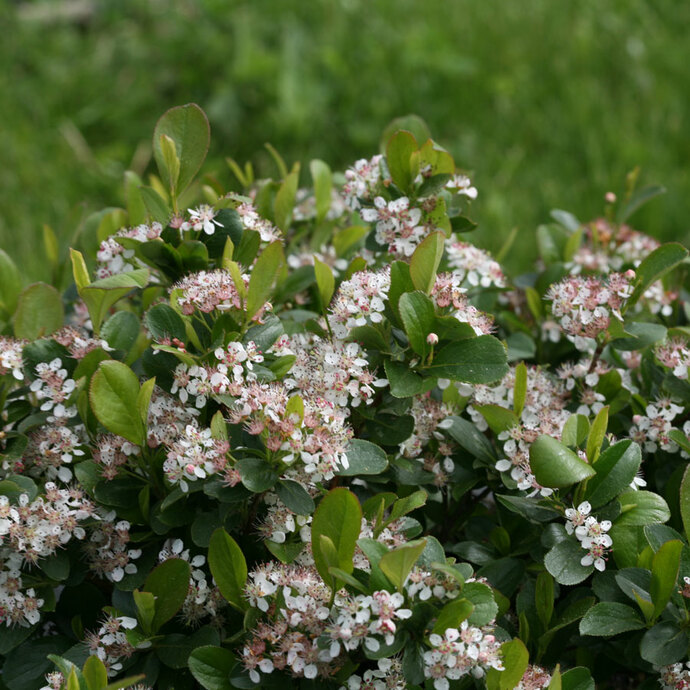 Aronia 'Low Scape Mound'; photo source - waysidegardens.com OTHER HIGH-HONOR PLANTS It seems as though every grower is developing their own award program. Particularly noteworthy are the award-winning shrubs crowned by Proven Winners this year. Keep your eyes open for Aronia ‘Low-scape Mound’ Aronia (chokeberry), ‘Firelight’ Hydrangea, and ‘Sonic Bloom’ Weigela. They take top honors for performance, reliability, and disease-resistance and deserve a spot in your landscape. Tracy Hankwitz
Horticulturist and general manager of Burlington Garden Center where you’ll find most of these award-winning plants this spring. 12/5/2018 0 Comments Give a Living Gift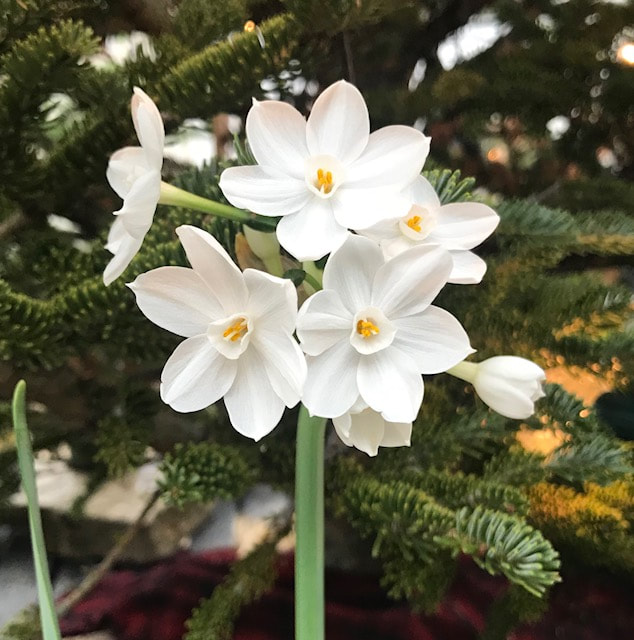 GIVE A LIVING GIFT Unique plants for the Holidays Plants make people happy - even at Christmas. As the outside world lies dormant in shades of browns, whites, and conifer greens, the sight of an indoor, living and growing plant gives the soul, not only pleasure, but hope. And though there is nothing wrong with the traditional poinsettia which is a commonly given, the following are thoughtful and unique plants for decorating and gifting. Paperwhites Paperwhites (shown above) are related to the spring-flowering daffodils, but their flowers are dainty, white, and not hardy here in Wisconsin. Use the bulbs to create a natural centerpiece for your holiday table by forcing them into bloom. Paperwhite bulbs need no chilling and will grow quickly, blooming in 3-4 weeks. Plant them now in a shallow container and surround with preserved moss and pine cones for a conversation starter at Christmas dinner. ‘Ziva’ is the most common paperwhite, but its fragrance can be too intense for some. ‘Inbal’ is a sweeter-smelling option, but if you want a very unique paperwhite, then ‘Wintersun’ is the one to grow. Instead of pure white, it is white with a yellow cup and has the sweetest fragrance of the three. Paperwhites are easy to grow in soil, but can also be placed in a glass container with pebbles and water. Once they are showing an inch of green leaves, use a 1:20 mix of alcohol to water to keep them from growing too tall. 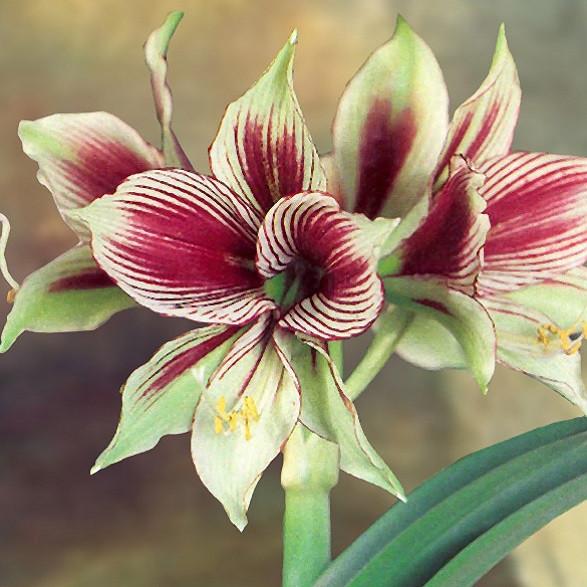 Amaryllis Another flower associated with the holidays is Amaryllis. This easy-to-grow bulb makes a living gift that will bring joy early in the new year when our winter-weary spirits need a boost. Once planted in a pot with soil, Amaryllis takes 10-14 weeks to bloom. Following are three rare varieties that can be difficult to find, but the hunt is always worth the delight they bring to those that watch them grow. Butterfly Amaryllis (Papilo) resembles an exotic orchid with its large green-tinged petals accented with maroon stripes. It is quite striking and can grow 18-24” tall with 5-6” blooms. 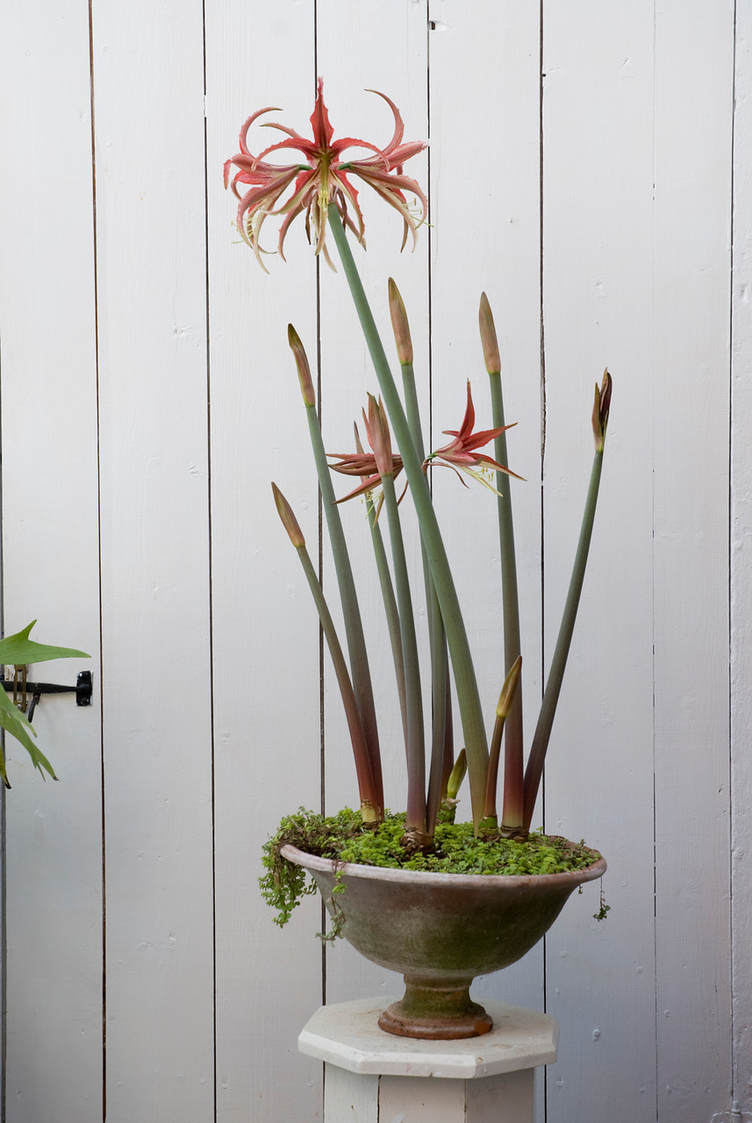 ‘La Paz’ Amaryllis, known as the Spider lily Amaryllis and the Peace Amaryllis, is a rare beauty. It’s long, narrow reddish petals are exquisite and will be most appreciated by savant gardeners. 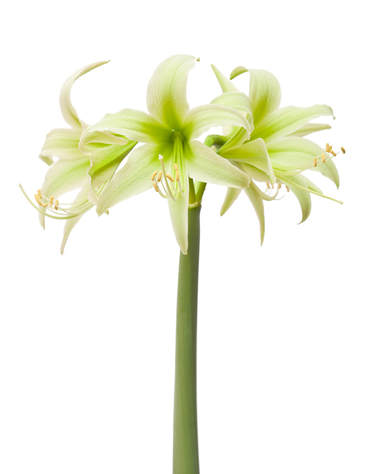 Closely related to ‘La Paz’, Evergreen Amaryllis has a lime green throat that flares out to slender, white petals. There are usually eight flowers per bulb that bloom at various times extending the season. ‘Evergreen’ has received the Award of Garden Merit from the Royal Horticultural Society.
When you gift these bulbs full of potential loveliness, you are giving the best gift possible: the gift of life, hope, and the pure joy of watching something grow. Tracy Hankwitz is a horticulturist and the general manager of Burlington Garden Center where you'll find these and other unique bulbs while supplies last. 10/15/2018 1 Comment Fall Garden EssentialsIt's time to clean up the yard and garden. Here are our favorite fall essentials that make work easier: 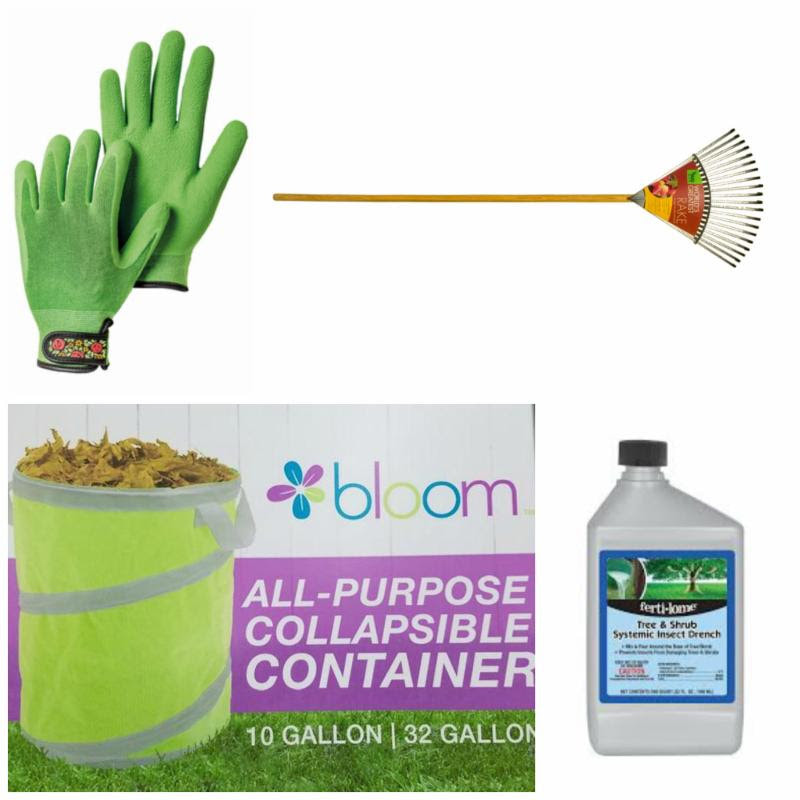 Gloves - Hestra makes some of the best gloves for working with wet leaves, cleaning up the garden, and digging in the soil.
The World's Greatest Rake is worth investing in! The 20 tines are flexible (aka they won't get all wonky) and it's moderate size makes it easy to handle. Fertilome's Tree & Shrub Systemic Insect Drench - apply now to protect your woody plants from insects for up to 12 months. If you had Japanese beetles eating birch trees, roses, and other ornamentals, this product is the solution! It's easy to apply: mix in a watering can and pour at the base of the plant. No spraying! Collapsible Container - everyone needs this handy helper - a pop-up tidy for leaves and garden debris. Available in two sizes. 10/15/2018 1 Comment Grow Your Own Garlic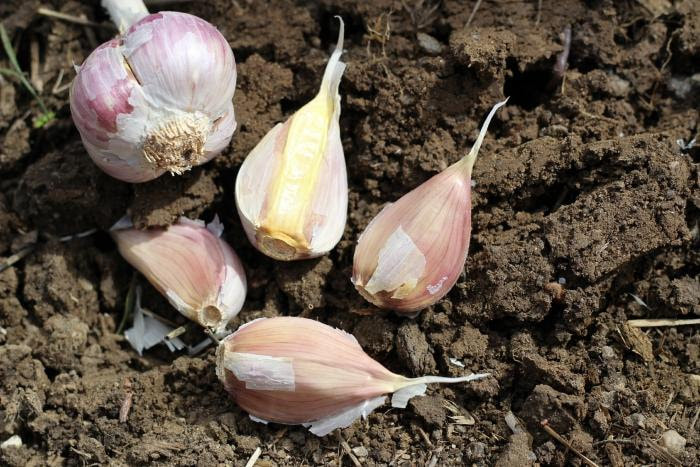 This cool, autumn air spurs us on to begin to put the garden to bed. As we cut back, clean up, and harvest one more time, we can also be planting. Now is the best time to plant garlic.
Why plant in the fall? The advantages to planting in the fall are huge - as in huge bulbs next August when they are harvested. The extra time they spend in the ground now allows roots to develop longer producing larger cloves for next year. Garlic also needs 30-60 days of cool weather for the single clove to form into a bulb with many cloves. Planting in the fall guarantees the cloves plenty of time to multiply. Try one of these varieties hard neck varieties: Spanish Roja is famous for it's flavor. This purple streaked variety produces 7-13 easy to peel cloves. It's one of the best for our climate. Early Italian Purple is a purple striped large bulb with many cloves. It does well in cold winters and hot summers. Italian Late is a silver skin variety. The cloves are plump and round with extra tight skin that makes it good for storage. It matures later than other varieties. German Red garlic is a large bulb with 8-12 cloves that are easy to peel. It has a strong, hot spicy flavor. 10/1/2018 1 Comment Great Pairings in the GardenOk, it isn't actually wine that we'll be pairing in this article, but you could enjoy a glass of it while you read this or as you are planting. Just as Pinot Noir compliments grilled salmon and Zinfandel pairs well with barbecued chicken, spring bulbs can compliment perennials with some thought and planning. Following are three ways to approach well-designed pairings. 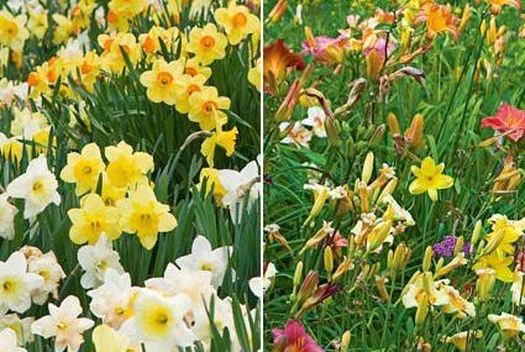 Daffodils and daylilies planted in the same area help hide dying foliage, extend bloom time, and keep deer away. One category of pairings is bulbs and perennials with similar foliage. Hiding the dying foliage of spring bulbs is an important factor in these perennial/bulb combinations. For example, two of the easiest masquerading combos are daylilies with daffodils (see above) and tulips with hostas (see below). The pairs have similar foliage allowing for quick cover-up as the daffodils and tulip foliage die back and the new leaves of daylilies and hosta emerge. Imagine seeing the combination above in the same space in your garden but at different months of the year! Another benefit of planting daffodils among the daylilies is that they will discourage deer from eating the daylilies. 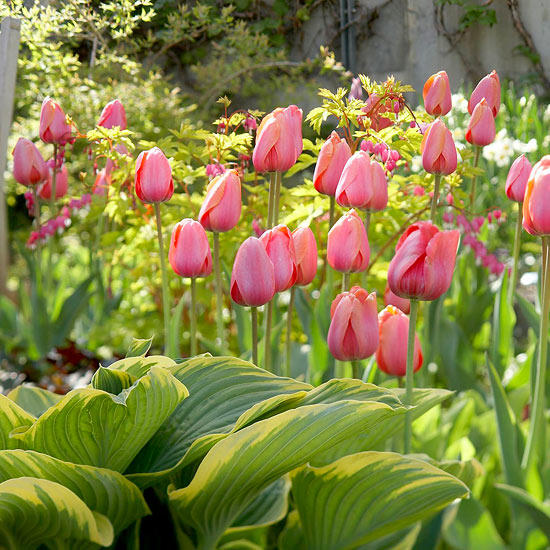 photo source: Better Homes and Gardens * Other perennials make great pairings because of their interesting spring foliage. Many perennials don't bloom until summer but have interesting leaves in the spring. Imagine flowers of spring-blooming bulbs rising above those leaves and then disappearing just as the perennial comes into bloom. This extends the color and interest in your landscape for another season without taking up more garden space. Lady's Mantle (Alchemilla mollis) & orange tulips (see below) would be stunning together in the garden especially with a burgundy barberry added to the scene. My favorite accidental combination that turned out amazingly well was when I planted the large bulbs of Allium 'Schubertii' amongst an area covered with variegated Dead Nettle (Lamium). It was striking as well as whimsical. 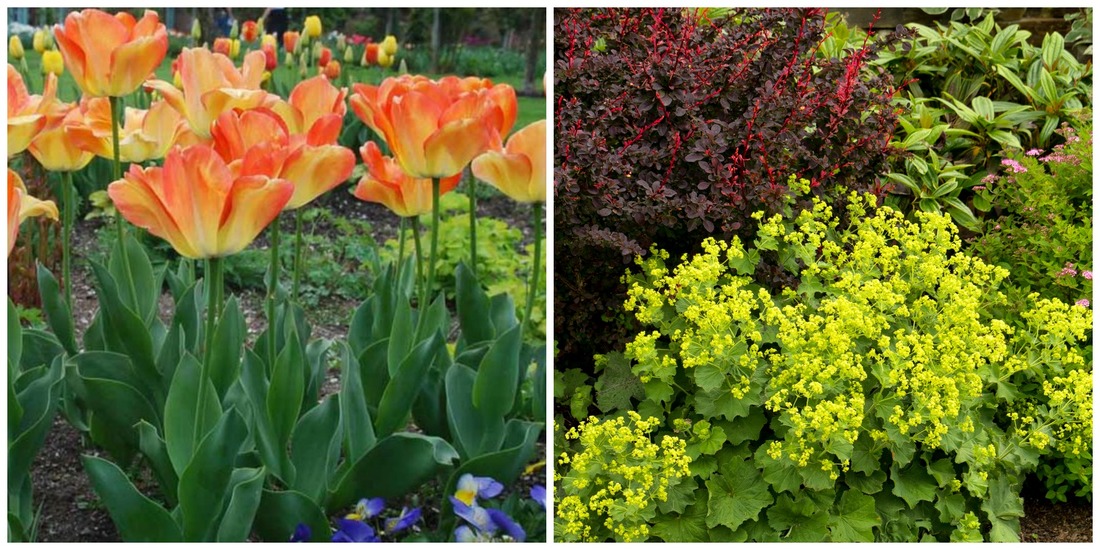 photo source: gardenia.net & monrovia.com Hostas & Purple Allium like 'Globemaster' make great partners in the garden. 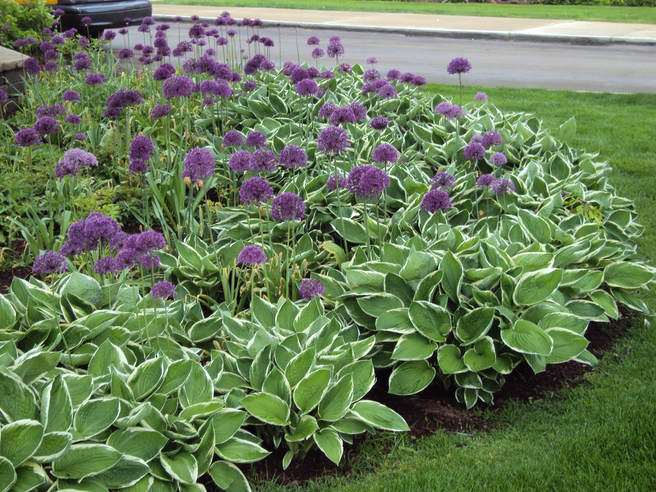 Purple Allium planted among variegated hostas. And doesn't this burgundy leaf Coral Bell (Heuchera) & these pink tulips make a pretty match? 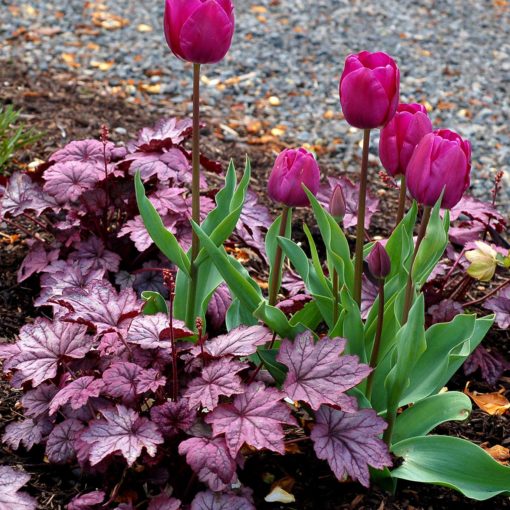 Coral Bells (Heuchera) and pink tulips; photo source: Terranovanurseries.com * The final group of great pairings are those with the same bloom time. It can be tricky to do but with experimentation, you can come up with outstanding combinations. Imagine orange Oriental poppies with dark purple 'Queen of Night' tulips - dramatic and delightful. 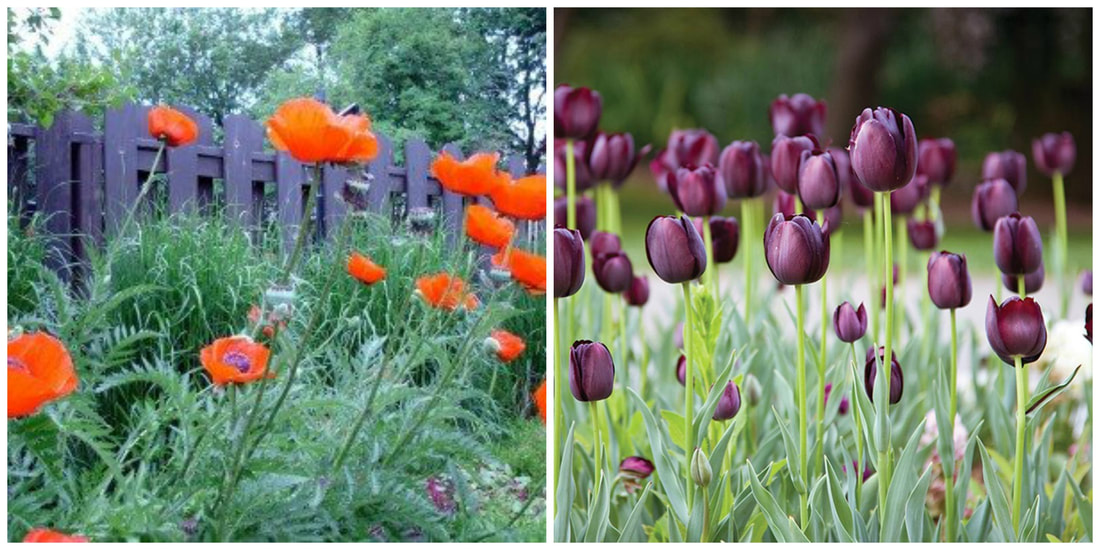 Oriental poppies intermingling with Queen of Night Tulips would look stunning. photo source: gardeningknowhow.com & groworganic.com Here are a few more great pairings of perennials and spring bulbs: * Penstemon & Daffodils - the dark burgundy foliage of 'Husker Red'or 'Dark Towers' looks especially fabulous with yellow daffodils nearby. * Hardy Geranium & Grape Hyacinths (Muscari) * Creeping phlox & Grape Hyacinths (Muscari) - see photo below * Golden Bleeding Heart & pink tulips - see photo below 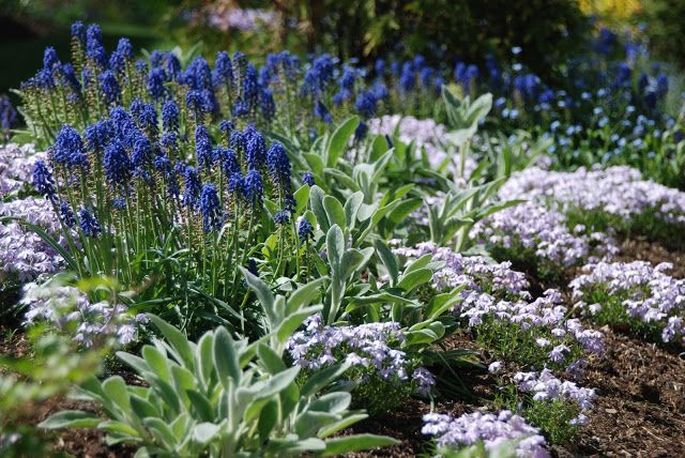 Muscari planted with creeping phlox and lamb's ear 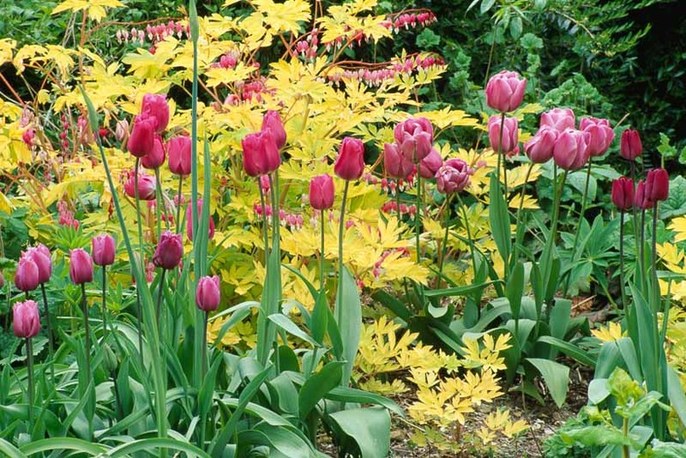 Golden Bleeding Heart with pink tulips (we like 'Whispering Dream'; photo source: gardenia.net Fall is the time to purchase spring-flowering bulbs and tuck them in the ground. In fact, if you are planting perennials now, throw a handful of bulbs in the same hole. Work smarter, not harder. And a final thought: just as a fine wine paired with the right entree provides a pleasurable dining experience, planting thoughtful combinations of bulbs and perennials can give your garden a well-designed look. Tracy Hankwitz Horticulturist and General Manager of Burlington Garden Center www.burlingtongardencenter.com 6/20/2018 1 Comment 5 Native Shrubs for Your Yard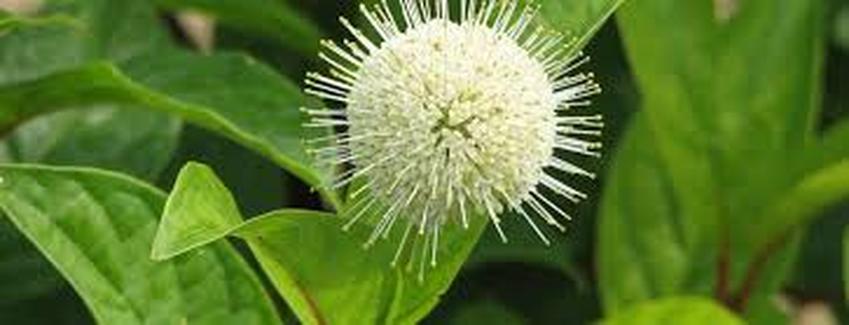 Here in midsummer, we find ourselves at the height of activity for pollinating birds and insects. While there is a plethora of plants that will attract them to your yard, the cry to use more native plants is beginning to make sense to more and more of us. Native plants are those found to grow naturally in our area, attract more varieties of wildlife, and are more adaptable to the soil and climate of where we live. And most are deer resistant! Here are five native shrubs to get you started: 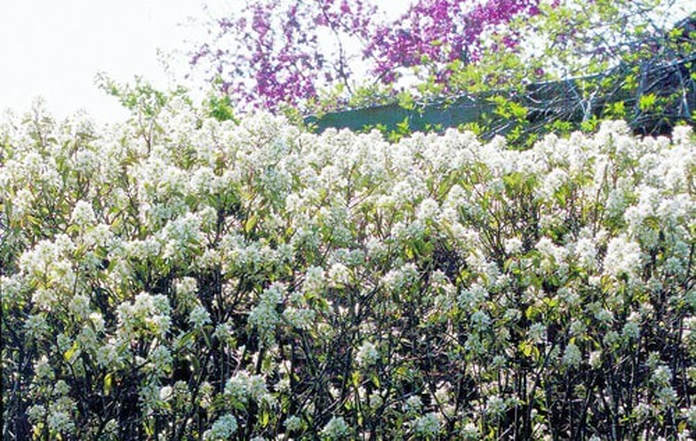 photo credit: capitalgazette.com You may already be familiar with serviceberry trees but not so familiar with their native, low-growing cousin. Running Serviceberry (Amelanchier stolonifera) grows 4-5’ tall and forms a 4-5’ wide colony. Showy, white flowers turn to showy, edible fruits that birds love (also good for pies). On a full sun to part shade location, use this native shrub for a slope, as a low hedge, in a woodland planting or to naturalize an area. * 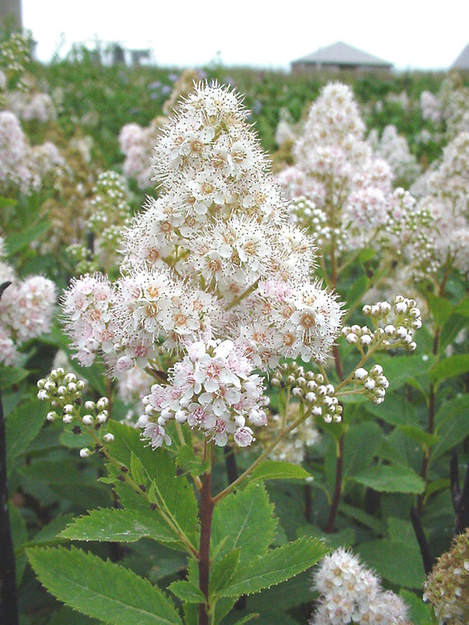 photo credit: gobotany.newenglandwild.org If you love butterfly bushes but have had trouble with them surviving our winters, then Meadowsweet (Spirea alba) is a great substitute. Butterflies love the long panicles of white flowers, songbirds feast on the seed heads, and it’s 3-4’ height makes it perfect for any garden. Plant Meadowsweet in a sunny location. * 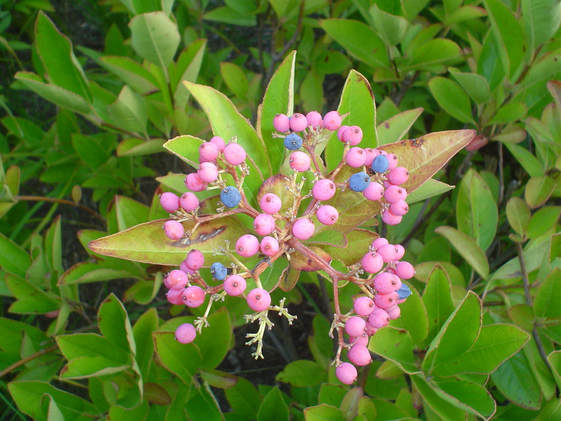 photo credit: plantplaces.com Witherod Viburnum (Viburnum nudum var. cassinoides) The best feature of this large-size shrub (8’+) is the pink fruits which eventually turn blue-black. White flowers appear in late June when pollinators are at their busiest. Doing its best in full sun to part shade, Witherod can be used in a border, as a screen, or any difficult spot. It attracts birds and pollinators. * 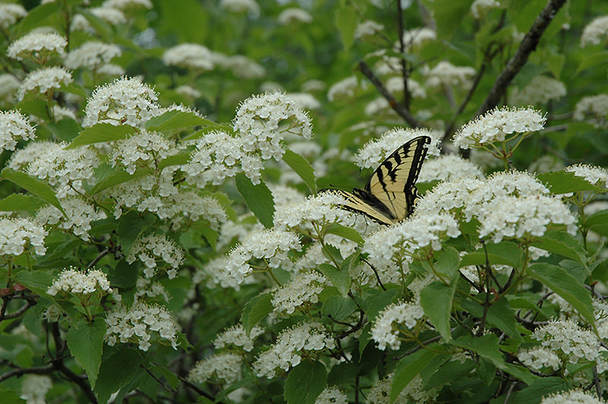 photo credit: salzseidernursery.com Downy Viburnum (Viburnum rafinesquianum) is a native shrub for the shade, especially dry shade. White spring flowers, that are a favorite among pollinators, turn to purple fruits in summer that attract songbirds and other wildlife. Growing 6-10’ tall, this native is at home in a woodland garden. * Buttonbush (Cephalanthus occidentalis) This interesting shrub (shown in the first photo of this post) has a lot going for it. It is quite happy in wet soils, along streams and ponds, but does well without excessive moisture. It’s white, fragrant, sci-fi flowers are a source of nectar for butterflies. The native species can grow up to 12’ so you may want to opt for ‘Fiber Optics’, a sunny, compact version that grows 5-6’ tall. Use it for naturalizing, to attract wildlife, and in rain gardens.
Tracy Hankwitz Horticulturist and General Manager of Burlington Garden Center where you can find these and more native plants. 5/16/2018 0 Comments A New Way to DesignDesigning a garden can be a mystery to most homeowners. Achieving a balance of continuous color and great foliage can take years of experimenting. We've made it easier with our new formula which can be used with perennials as well as trees and shrubs. We think it's such a great idea, we've set up our Perennial House with these categories for our sunny perennials. Here's the recipe for your success: 1 part Backbone plants 1 part Long Blooming plants 3 parts Plants for a Season: * 1 part Spring Blooming * 1 part Summer Blooming * 1 part Fall Blooming Choose plants from each of the above categories for a well-balanced, well-designed perennial bed. Then, for fun, add in a few Plants for a Reason - it's like the frosting on the cake. 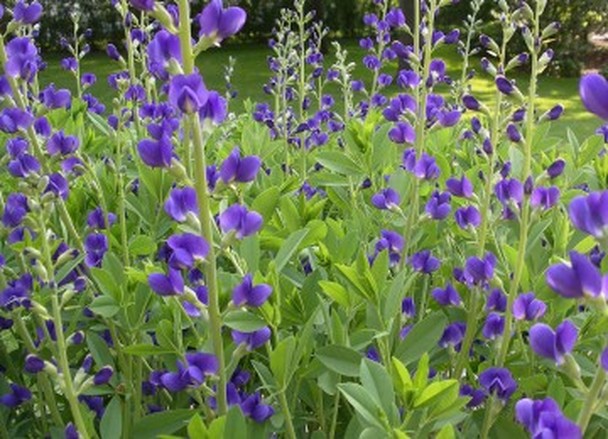 False Indigo (Baptisia) is a good backbone plant Step One: Backbone Plants Every well-designed garden begins with a good foundation, or in this case, a good backbone. In the perennial garden, backbone plants provide structure and interest through the entire season. This included peonies and hardy Hibiscus, which become shrub-like when not in bloom. The same is true of False Indigo (Baptisia), which can grow to be 3' tall and 3' wide. Plants with variegated foliage (Vanilla Gorilla Masterwort) , silver foliage (Silver Mound Artemisia), chartreuse foliage or other interesting foliage (Lady's Mantle) are also included in this category because they look great even when not in bloom. Tall perennials, such as Delphinium, Hollyhocks, and Penstemon are included in this group as well. Their tall stature gives the garden a back drop for other perennials. In the mixed border when shrubs are also included, evergreens are considered a backbone plant as are shrubs with interesting foliage like variegated dogwoods. 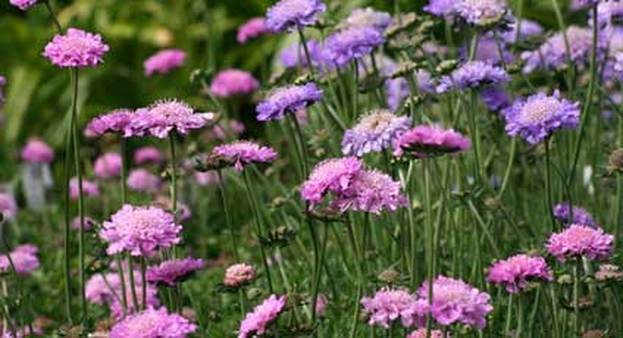 Long-blooming Pincushion Flower (Scabiosa) Step Two: Long-Blooming Plants The workhorse of every well-designed garden are plants that have a long bloom time. It's unrealistic to expect a perennial to flower April through October, however, there are several perennial families that bloom for a good three months. This category includes Coreopsis, daisies, Hardy Geraniums, Catmints, and Salvias among others. By the way, the new April Night Salvia actually blooms in April - a whole month earlier than other Salvias - giving the spring garden deep purple color. Repeat bloomers like Purple d'Oro Daylilies are also included in this category of long-blooming perennials. Note that some of these plants need to be deadheaded or sheared back to encourage more blooms. 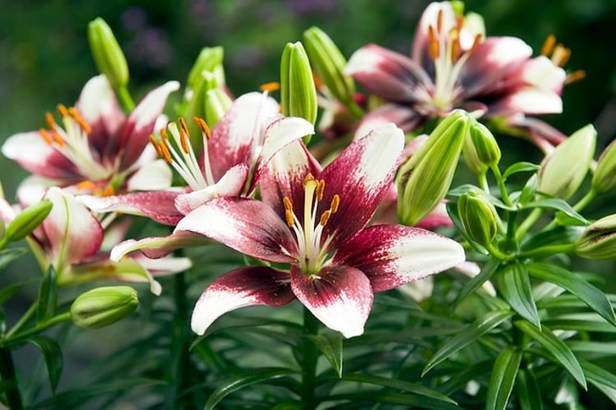 Asiatic lilies are the diva of the early summer garden. Step Three: Plants for a Season This is an important step when trying to achieve a perennial garden in which something is always blooming. Spring, Summer, and Fall each have their stars, so a well-designed garden will include a few of each. Spring (April - May): creeping Phlox, Iris, and Anemone Summer (June - August): Alliums, daylillies, Asiatic lilies, Phlox, Black-eyed Susans, Russian Sage, and yarrow Fall (Sept - October): Asters, hardy mums, and ornamental grasses Choosing at least one from each of these seasonal categories, combined with long-blooming perennials from step two, will ensure a continuous color show. 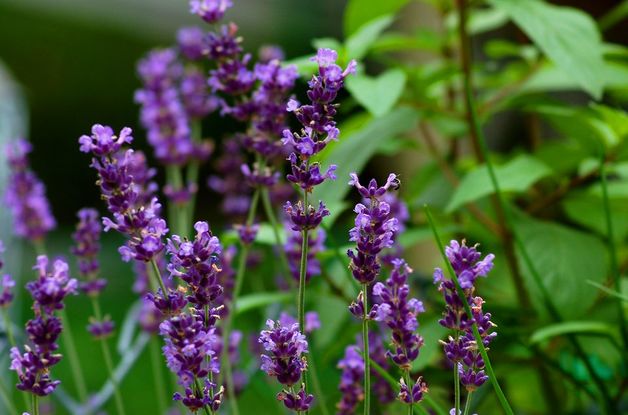 Lavender is a great plant for pollinators. Step Four: Plants for a Reason
This final category of sunny perennials are plants with a purpose, fill a need, or are just for fun. They could become theme gardens as well. A few that we are including this spring are: * Plants for Pollinators * Drought-tolerant Plants * Native and Nativar Plants * Deer Resistant Plants * Groundcovers * Climbers * A Collector's Corner with hard to find plants We think this is a fail-proof way to design a garden. Remember, we've set up our perennial house with these categories of sunny perennials to make it even easier for you. By including plants from each category and planting in threes and fives, your garden will provide interesting flowers, foliage through the entire growing season, and a well-designed look. Tracy Hankwitz Horticulturist and General Manager of Burlington Garden Center 5/3/2018 2 Comments Container Gardening Tips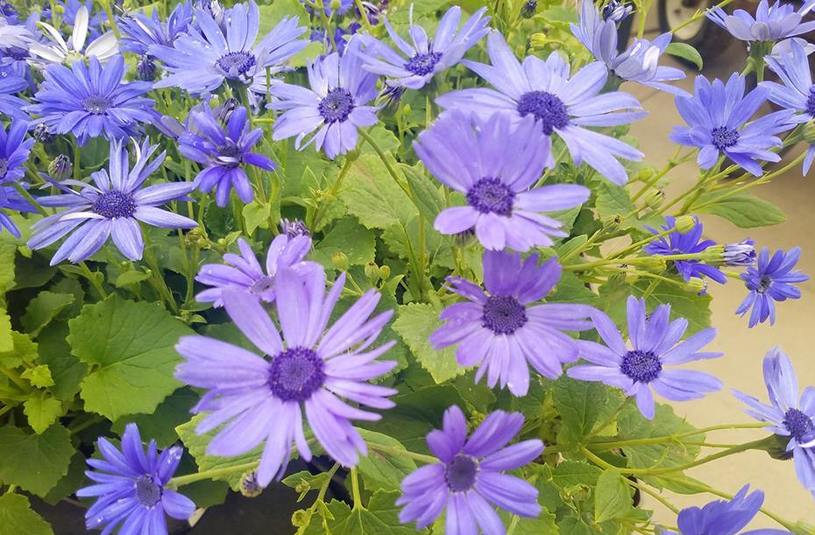 One of the most enjoyable pastimes of gardening is planting containers to dress up the front entrance, patio, and deck. Especially now with the landscape just beginning to awaken, pots filled with pansies and snapdragons remind us that yes, it IS spring. May promises to be what we hope is more of a normal spring month, but remember, that is just what it is - a spring month. It's too soon to be filling containers with summer annuals that are thriving now in the heated greenhouse. Here in Wisconsin we enjoy four very different seasons, so celebrate each one in your containers. Spring pots can be filled with pussy willow stems, pansies, snapdragons, nemesia, and our new favorite, Senetti, (shown above) which can take temperatures down to 35 degrees. Or plant a pot with spring-blooming perennials like the one below. Once June rolls around, plant the perennials in the garden and fill your containers with summer annuals. Then come fall, it's time to switch them out for mums, kale, and fall Rudbeckia and finally fresh-cut greens and red dogwood for winter. 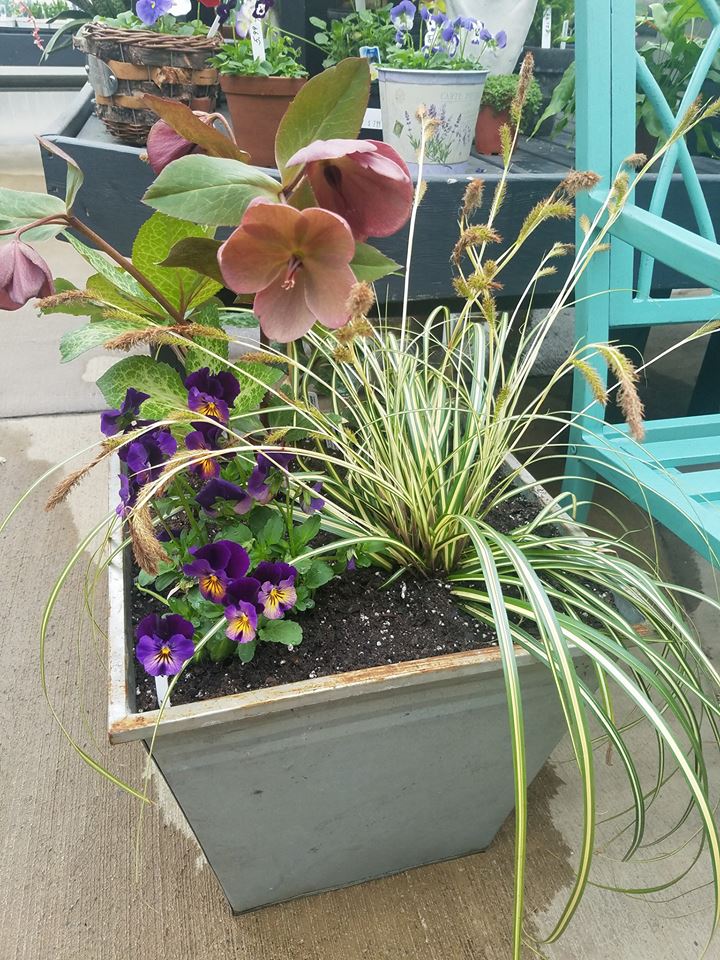 Need inspiration for your summer containers? Stop in and walk through the greenhouses which are full of new annual varieties as well as old favorites. Our staff is willing to help you select combinations that grow well together. You can also ask for a complimentary copy of the Proven Winner Idea Book for 2018 at the checkout counter. 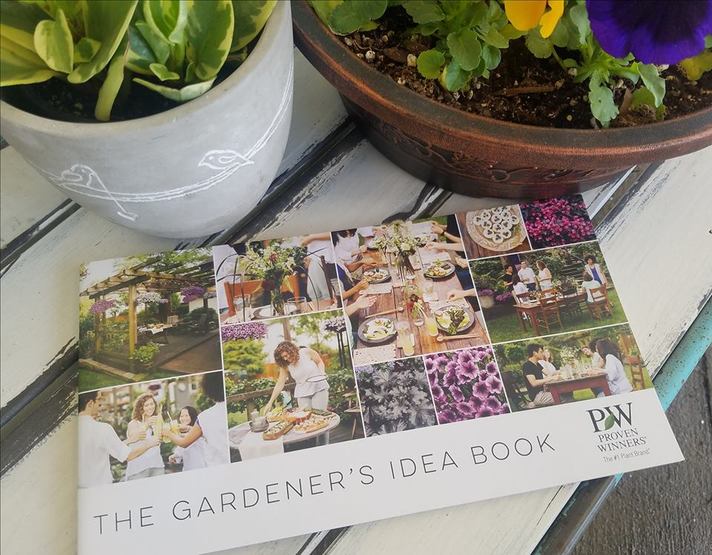 Start your container gardens off right with fresh potting soil and a slow-release fertilizer. Use what we use! This year we are using Pro-Mix which is peat and bark-based. It also contains biofungicide and mycorrhizae - natural ingredients that make a visible difference in plant health, size, and vigor. We have also switched from Osmocote to a natural, slow-release fertilizer called Sustane. Sustane can be used in containers as well as in the vegetable garden. Both are available here at BGC! 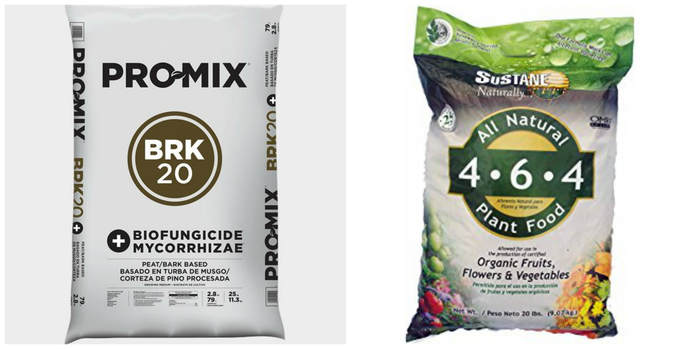 Let us plant your container for you!
Not sure what to plant, or don't have time to do it yourself? Every spring, we plant containers for almost 100 customers! Bring in your containers, give us an idea of what you like, sun or shade requirements, and we'll take it from there. We plant, then we'll keep your containers until the weather is nice in mid-late May. We keep a record of what we plant, so we can do it again for you next year! Call today for more information (262-763-2153) or stop in and ask for Marty, Pam, or Taylor. 4/26/2018 0 Comments Grow Your Own Asparagus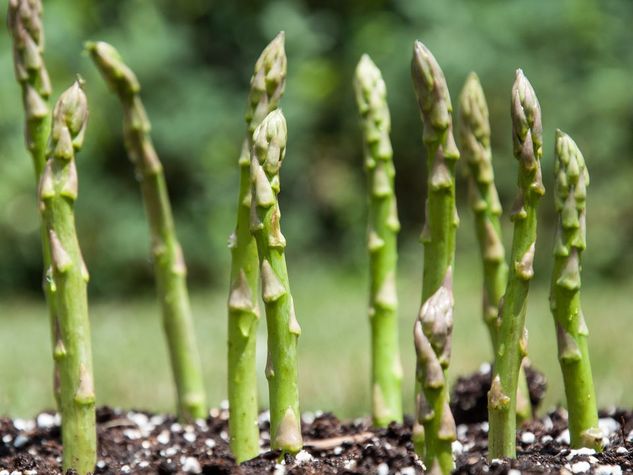 Asparagus is one of the first vegetables in spring to grace our kitchen tables. An asparagus patch can be productive for 15 years or more if well-tended so why not plant your own bed of this delightful edible.
You will need: * asparagus crowns (males are preferred) * sunny spot * composted manure * shovel Asparagus is usually planted by crowns from mid-April to late May after the soil has warmed up to about 50 degrees. Male varieties like 'Jersey Knight' are better producers because they expend all their energy into producing a tender, abundant crop instead of producing seed. Choose a sunny spot with well-drained soil on the north or west side of the garden where it can remain undisturbed. Dig a furrow about 6-8 inches deep and 12 inches wide. Add a layer of composted cow manure for a slow-release fertilizer. Place the crowns 1 ½ feet apart in the furrow on top of the manure. Rows should be spaced five feet apart to promote air circulation which will help prevent the spread of fungal diseases. Cover crowns with two inches of soil, gradually adding more soil through the growing season until the furrow has been filled. Spears should emerge within one week in moist soils. Asparagus should not be harvested the first year and sparingly the second year. Let the spears develop into ferns which will help produce food for next year’s crop. The ferny foliage also has ornamental value and looks attractive when interplanted with the bright colors of zinnias or the soft pastels of cosmos. RECIPE FOR CREAMY ASPARAGUS 2 c. water 2 lbs. asparagus 1/2 c. chopped onion 2 T. flour 2 T. butter 1 tsp. garlic powder 1 tsp. lemon pepper 1/2 tsp. salt 1 c. chicken broth 1/4 c. parsley 2 T. vinegar 1 tsp. dill 8 oz. sour cream Cook asparagus; saute onion and butter. Add next 4 ingredients. Gradually add broth. Add parsley, vinegar, and dill. Bring to a boil for 2 minutes. Reduce heat and whisk in sour cream. Serve at room temperature. ASPARAGUS WITH PENNE & TOMATOES 5 garlic cloves, minced 1 pt. cherry tomatoes Salt to taste ¼ cup olive oil 1 T. fresh oregano, chopped ¼ c. shredded parmesan cheese 1 tablespoon butter ¼ tsp. red pepper flakes ½ lb. penne pasta, cooked, drained 1 pound fresh asparagus In a skillet, sauté garlic in oil and butter for 2-3 minutes. Cut asparagus into 1 ½ -inch lengths and cook in skillet for 5 minutes. Add cherry tomatoes, oregano, red pepper flakes, and salt; cook until heated through. Add parmesan cheese and mix well. Pour over hot pasta and toss to coat. Serve immediately. Serves 4. 4/17/2018 2 Comments The Ornamental Edible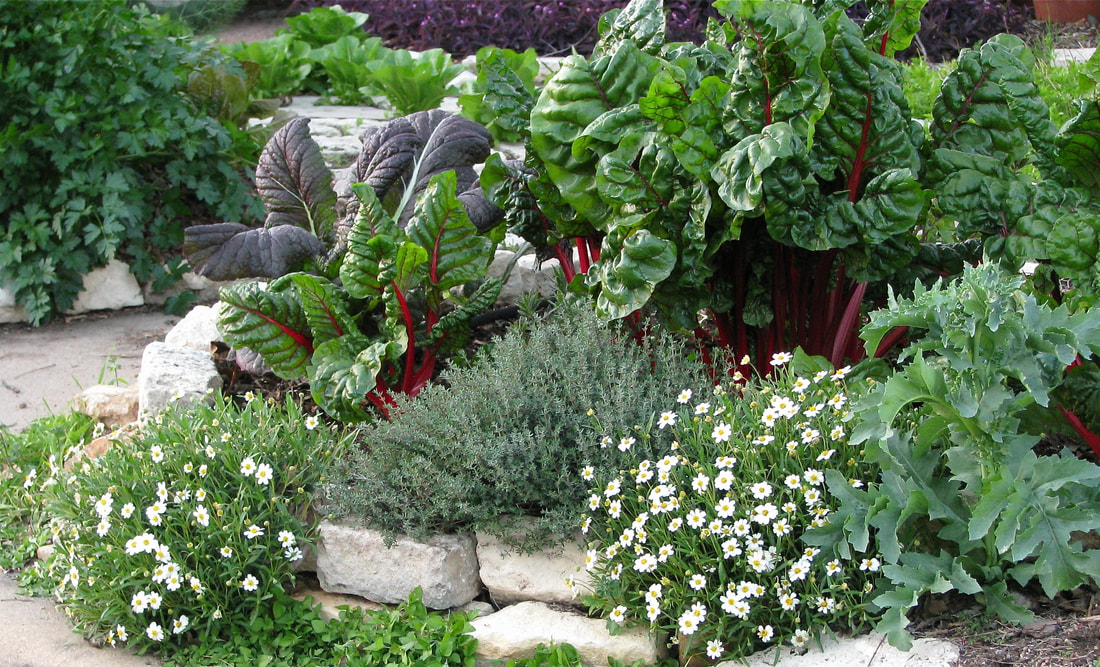 Growing your own food has taken on a new dimension. Tomatoes, squash, and Swiss chard are all making their way into the landscape. Perhaps you don't have room or time for a full-out vegetable garden. Maybe you only want to grow one tomato plant and some kale, or the only sunny spot might be in the front yard. It's time to think outside the box, or in this case, outside the garden, and consider edible landscaping. * The foliage of many edible plants are very attractive and offer interesting texture and color when planted among perennials, trees, and shrubs. In the photo above, the broad colorful leaves of Swiss chard, Japanese mustard, and artichoke add interest when mixed with thyme and rock garden plants. 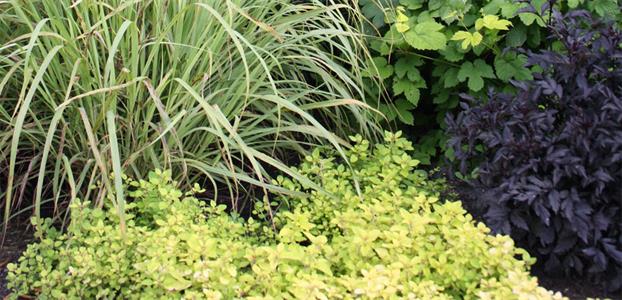 Above: A trio of edibles with chartreuse foliage make a lovely contrast with the burgundy leaves of Astilbe. 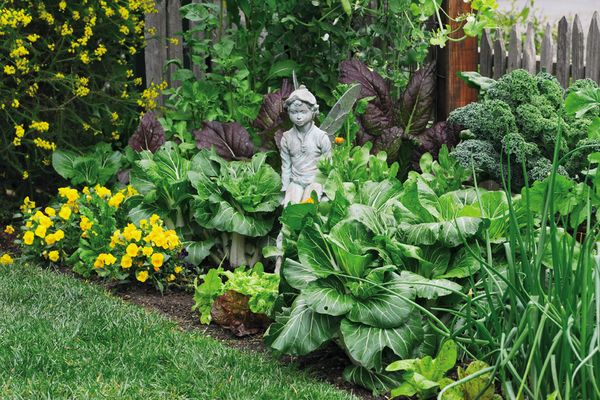 Above: Create a border of edible collard greens, Japanese mustard, onion, and broccoli. Add in flowers and pockets of salad greens. The fairy statue gives the bed an ornamental, whimsical touch. 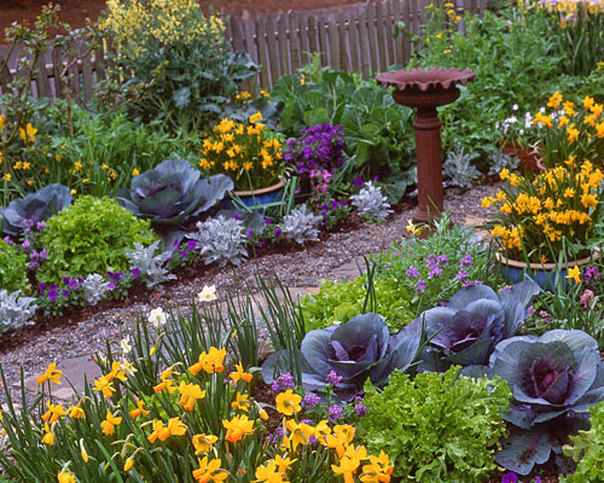 Above: The blue-gray leaves of cabbage plants mingle nicely with daffodils, dusty miller, pansies, and lettuce. 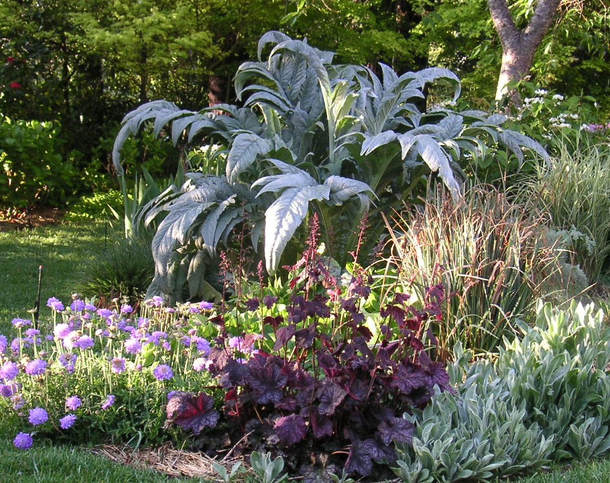 Above: Think of ways to introduce edible plants into your existing landscapes: The lavender-colored Scabiosa could easily be replaced with chives; the dark leaf Coral bells could be substituted with ruby lettuce; plant garden sage instead of dusty miller, and lemon grass in place of ornamental grass. 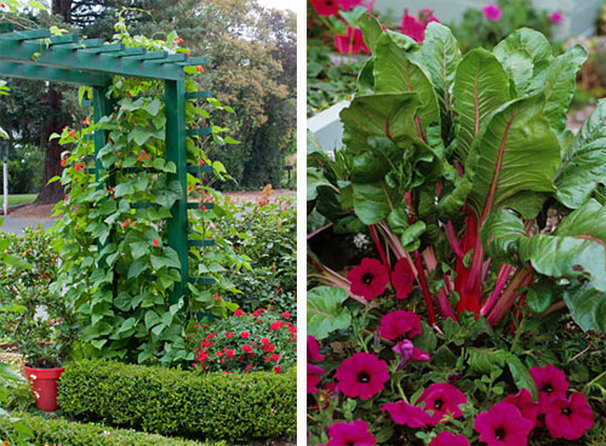 Above right: The red stems of Swiss chard are striking with a red petunia in a container. Above left: Plant an edible vine to scramble up an arbor. Scarlet runner bean is a great option and grows quickly. 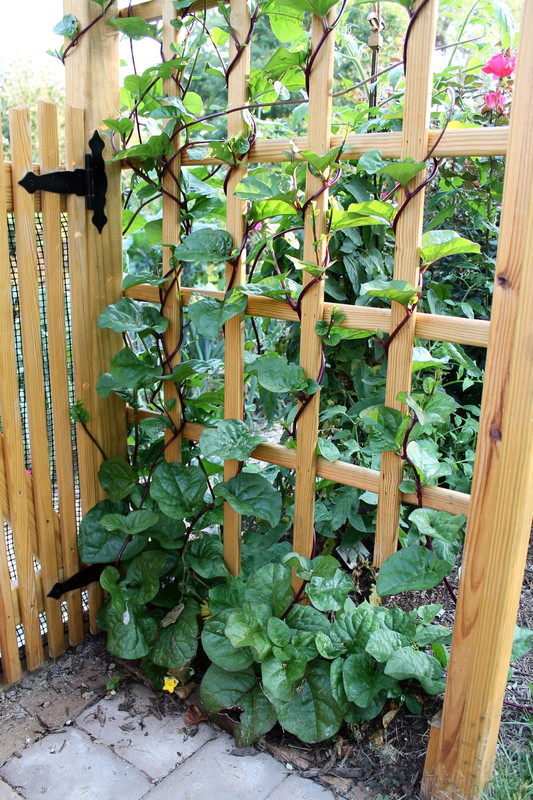 Above: This vine is truly edible: it's Malabar spinach! The stems are a deep purple and thick leaves are tasty in a salad. 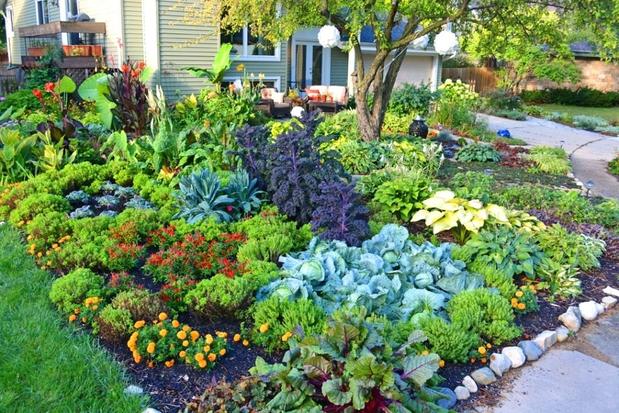 Above: A final source of inspiration is this quilt-like planting that includes cabbage, several kale, and Swiss chard along with marigolds, hostas and tropical plants. * It's a new growing season, and a new way of looking at the food you grow, so think outside the box - oops - garden. Plant the carrots next to the daisies, peas with the pansies, and tomatoes with the cosmos. They'll all be happier growing as companions in the garden, and they make an pretty, interesting landscape, too. * 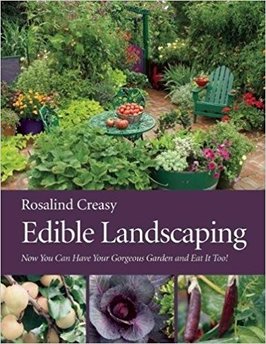 Recommended Reading: Edible Landscaping by Rosalind Creasy. She's the authority on the subject and we have her book here at BGC! It is so inspiring. Seriously. It'll make you rethink how you landscape and soon you'll be growing pole beans in place of clematis and tucking salad greens in with your perennials. All photos are from rosalindcreasy.com or pinterest.com.
3/29/2018 0 Comments Forcing Branches Indoors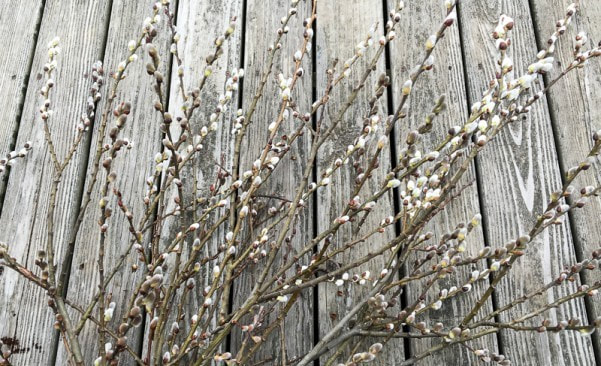 We all are getting a little antsy by now to see signs of spring. For those of us who can’t wait any longer, there is a way to hasten spring’s arrival. Get your pruners ready and read on. Many flowering trees and shrubs set their flower buds last season. By now they have had their required period of cold temperatures and can be forced out of dormancy. On a mild day, head outside with your pruners and select a few branches to force indoors. Stems that are less than ½” in diameter work best. The most common and easiest branches to force are those of the yellow-blooming Forsythia. Select branches near the top of the shrub for best flowering. In addition, try forcing branches from these trees and shrubs for beautiful blossoms: Saucer Magnolia Fothergilla Quince Lilac Serviceberry Here’s how to force them: prepare a bucket of warm water (about 100 degrees). Adding floral preservative will help stems stay hydrated longer and keep the water clean. Set the bucket aside. Fill a sink with hot water. Place stems in the sink and recut at an angle while holding under water. Immediately place stems in the bucket. Keep the stems cool (45-55 degrees) for a week or two, changing the water each week. When the first buds begin to show, create an arrangement and place where you can enjoy. A few more tips: You may need to crush or split the ends of larger branches to increase the surface area available to take up water. If the branches you try to force don’t work, it may be too early. Try again in a couple weeks. Misting the branches frequently can help them last longer in a vase. Cut fresh branches every week until spring arrives and experiment with other trees and shrubs in your yard. Forced dogwood leaves and birch catkins can also be very pretty. Tracy Hankwitz Burlington Garden Center General Manager 3/6/2018 0 Comments Cultivating the SoilEver since fourth grade, Frances Hodgson Burnett's 'The Secret Garden' has been a favorite of mine. One of the quotes that has stuck with me well into adulthood is when a very timid Mary asks her guardian, Mr. Craven, 'Might I have a bit of earth?" But only as of late have I noticed his response: “When you see a bit of earth you want,. . . take it, child, and make it come alive.” 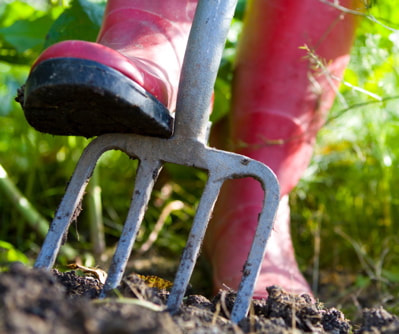 The Soil & it’s Amendments
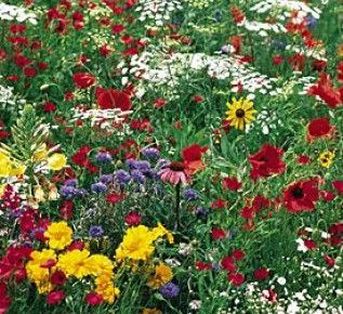
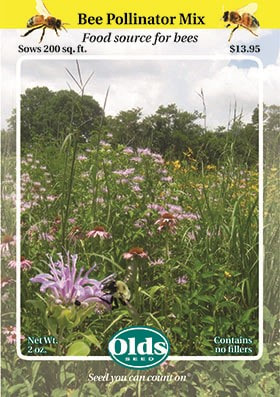
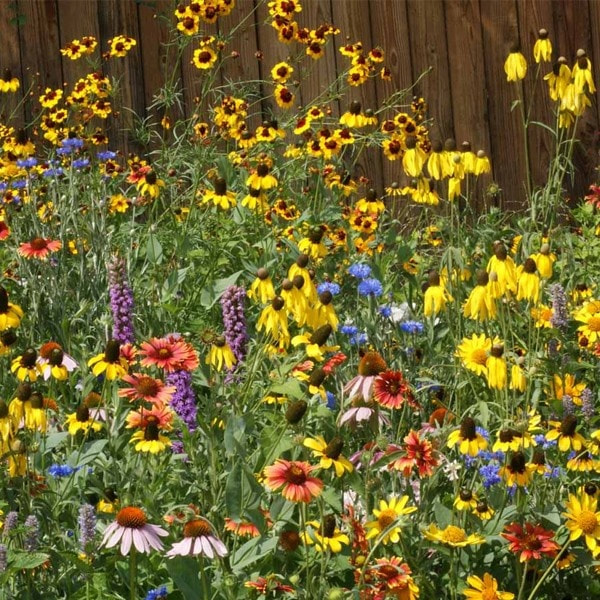
‘I find that a real gardener is not one who cultivates flowers; but one who cultivates the soil.’ Karel Kapek When to Work the Soil & When to Plant One of the easiest ways to know when the soil is ready to be worked is by doing the simple ball test: form a ball of soil in your hand, then press your thumb into it. If it breaks apart, the soil is ready to be worked. If the ball of soil does not break apart, the soil is too wet, so waiting a little long is best. Another common mistake among anxious gardeners is to plant before the soil is warm enough. Some seeds will germinate in soil temperatures of 60 degrees (like peas). Other seeds, like pumpkin and squash, need warmer soil temperatures of 80 degrees to germinate. The best way to know when the soil is warm enough is to use a soil thermometer - it takes the guesswork out . A soil temperature chart is also helpful as it lists crops and their optimal temperature ranges for germination. Click here for your free chart! Soil Amendments Soil pH is probably the most important factor in how well a plant will grow. If the pH is out of wack, then plant roots are unable to break down nutrients in the soil and make them available for the plant to absorb. Our soils in southeastern Wisconsin are naturally alkaline, so adding lime to the soil before planting is not necessary. Most likely soil will need to be amended with sulfur or peat moss in order to lower the pH, but rather than guess how much, a simple soil test should be done. You can do this yourself with a pH tester available here at Burlington Garden Center. If you want a more exact analysis, then a soil test can be taken and mailed away and analyzed for a cost. Ask us for information and a free envelope if you want to pursue this. How to achieve the best soil? Once you know that the pH is in line with the crop you are growing, the next best thing you can do is feed the soil. By feeding the soil, in essence, you are feeding your plants. In fact, by adding organic matter, your soil becomes more alive with microbes that break down nitrogen - which is necessary in order for plants to use it and grow healthy green leaves. Adding organic material in the form of compost is the best way to feed the soil. If you have a compost pile, add compost to the soil in the fall or in the early spring. If you don't make your own compost, then here are a few we recommend: Leaf compost (nature's black gold) Nature's Blend w/Alfalfa & Humates (a wonderful mix of cottonburr compost, cow manure, alfalfa, and humates) Mushroom compost (use every 3 years to avoid a build up of salts) Chicken or cow manure (aged for a year is best) Cotton burr compost (not only is this a great soil amendment, but many gardeners use it as a mulch around their perennials) Worm Castings (are another good source of microbial activity) All of the above amendments are available here at BGC. Remember, healthy plants begin with healthy soil. Let us know how we can help you make this year your best year growing in the garden. And in the spirit of Mr. Craven "When you see a bit of earth you want,. . . take it, and make it come alive.” - Tracy Hankwitz BGC General Manager & Horticulturist 3/6/2018 2 Comments Growing Wildflowers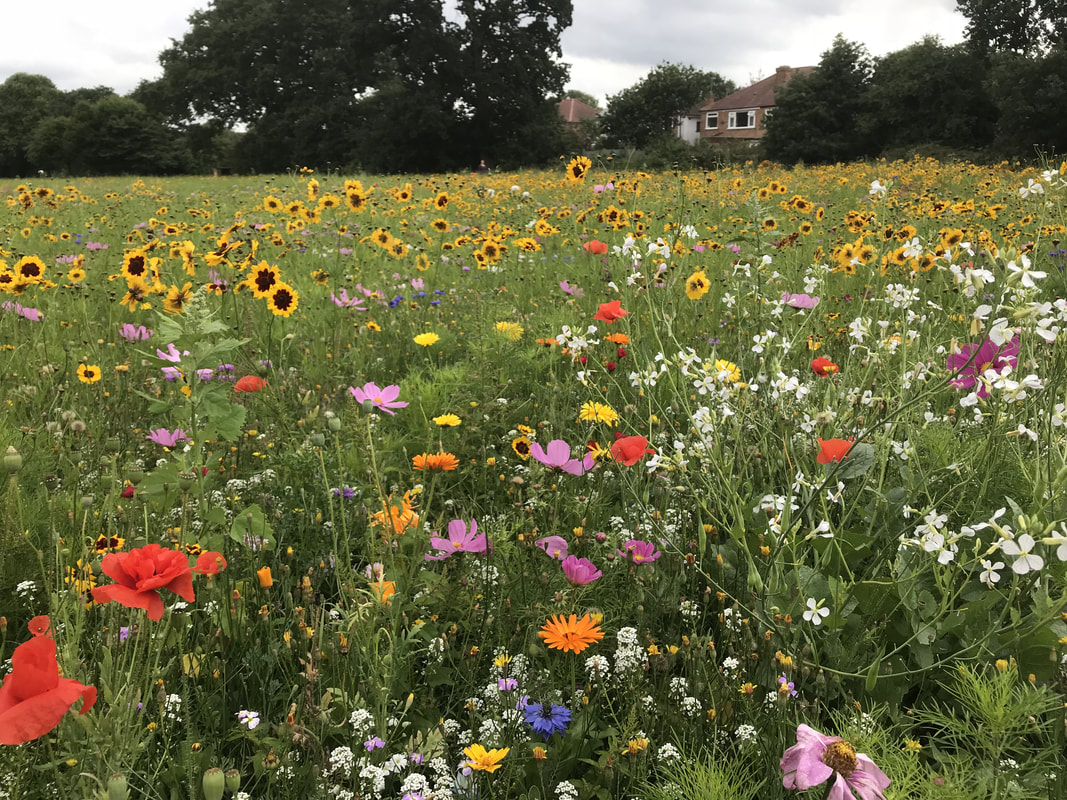 Have you ever heard a garden hum? One that not only hums but is full of movement - alive with butterflies and buzzing bees? Plant a bit of earth with wildflowers and you will have such a garden. But two questions may come to mind: 'why?' and 'how?' Hopefully the 'why' is obvious as they attract pollinators into the garden which help plants, especially fruits and vegetables, grow better which means more food on the table. And the 'how'? The easiest way to begin is with seeds. Following are several wildflower seed mixes that are available here at BGC. We love these mixes from Olds Seed not only because of the colorful combinations of flowers and native grasses, but they contain no fillers or inert ingredients. It's pure seed! I've also included a few tips on growing them successfully as well as a challenge for all of us to consider.
Basic Steps to Growing Wildflowers 1. Decide what to plant If you want color the first year, choose a mix that contains annual flower varieties. Perennials will bloom the second year from seed. For lots of color, sow the heavier recommended amount. 2. Where and when will you plant? Most wildflower seed mixes require a site that receives at least six hours of sun. Sow in spring when the soil has warmed - mid to late May and into early June. 3. Clean and prep your site Remove existing vegetation, then till shallow or loosen soil with a rake or hoe for good seed-soil contact. On sloped areas use a mat for erosion control. 4. Sowing tips It is best to sow wildflower seeds with a carrier like sand. Milorganite works even better! Mix approximately one handful of seed with one quart of carrier. Lightly rake the seed in not covering more than 1/8" to 1/4". Keep area moist for several weeks until most seeds germinate. 5. First year care Seedlings will emerge in 2-3 weeks. You'll see flowers in 6-10 weeks. If it has become a weed patch by mid-summer, mow with the deck set at the highest setting before weeds set seed. During dry spells, water deeply every two weeks. After the flowers have set seed in the fall, mow at 4-6" to scatter the seed. Do this only the first fall. 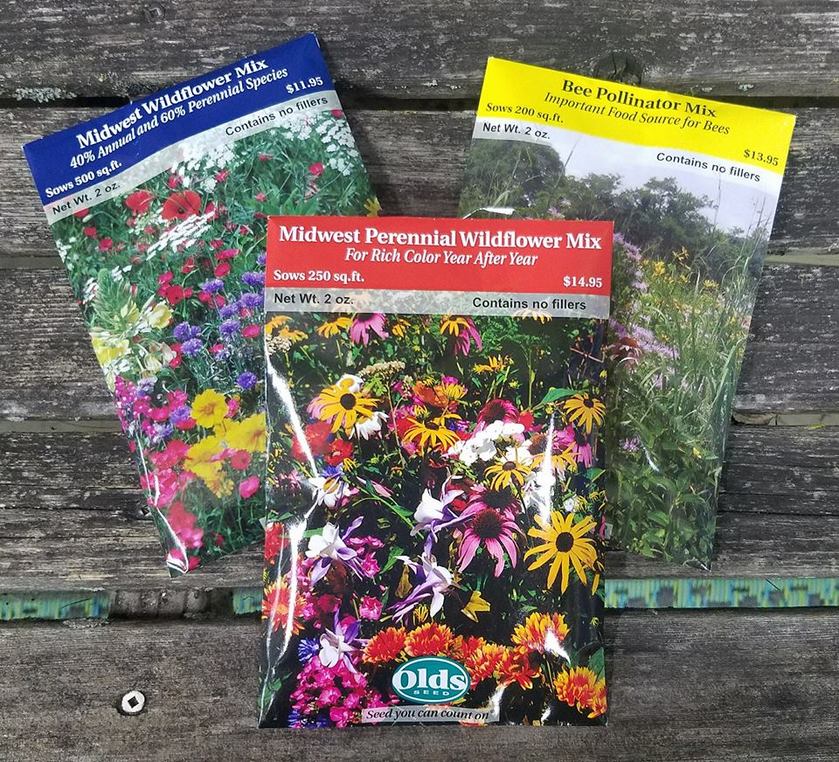 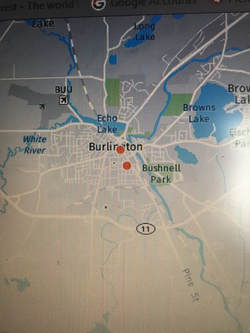 Are you up for a challenge? Be part of a movement to create one million pollinator gardens. To the left is a photo of the number that have registered in Burlington. Two! Come on, everyone! We can do better than that! Join our staff and follow the link below to take the challenge and bee one in a million! millionpollinatorgardens.org/ Be sure to pick up a free brochure with more planting tips next time you visit us at BGC. See you soon! Tracy Hankwitz Burlington Garden Center General Manager & Horticulturist 2/18/2018 0 Comments Winter's Interest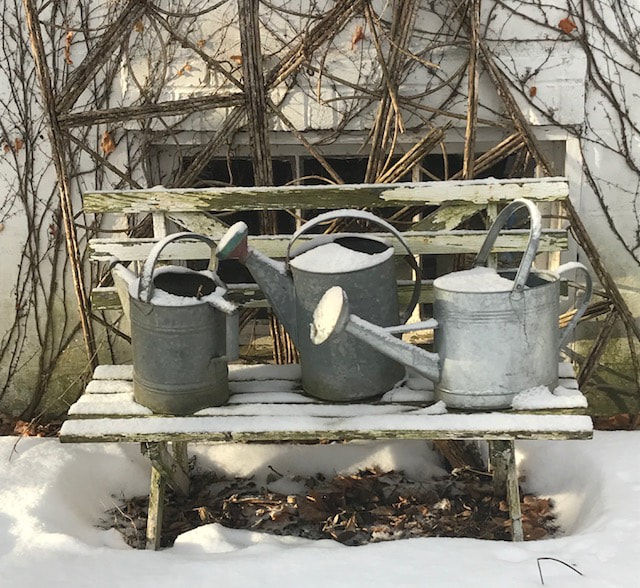 Reading an article about winter is probably the last thing you want to do on days when it's in the 40's and feeling like spring. But before we leave winter completely behind us, have you really looked at your yard when covered in snow? Is winter interesting when you look out your window? This is when we see the bones of our landscape - trees, shrubs, sturdy stems of perennials, statuary , and hardscapes - all provide structure and interest. 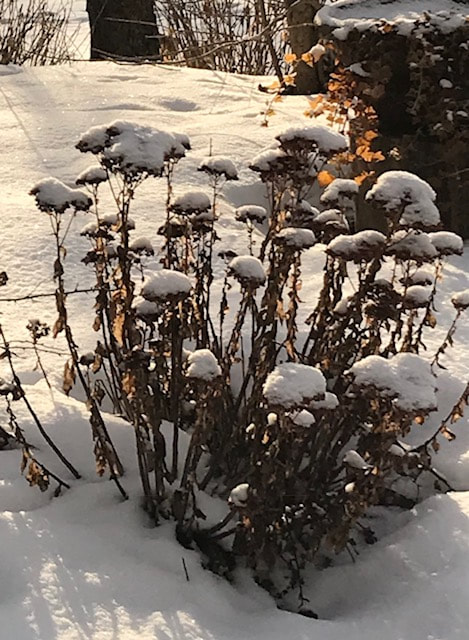 Leave a few perennials standing for the winter. Take this 'Autumn Joy' Sedum above. It's an unassuming, overused perennial, but these stems have held up under 8+ inches of wet, heavy snow more than once. At one point they looked like strange mushrooms found in a woodland. If they had been trimmed back in the fall, this spot would have not been as interesting to look at. 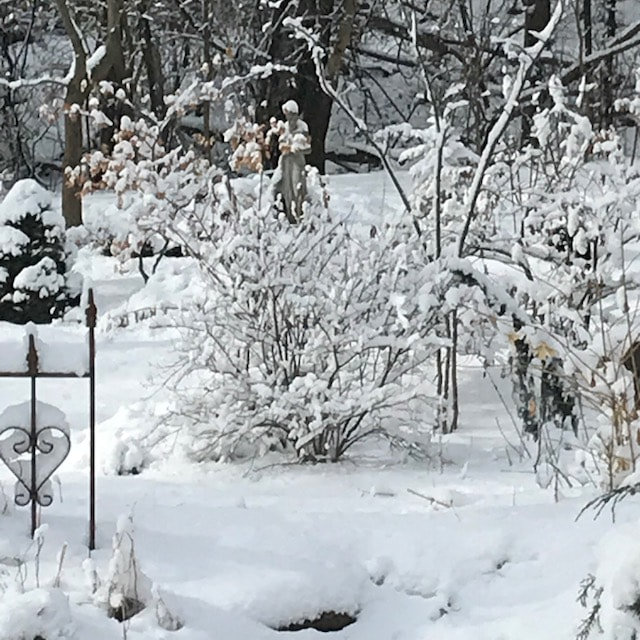 A fresh snow brings the landscape to life. Statuary and other garden ornamentation can add character and charm to a rather bland palette. In the photo above, taken a couple snowfalls ago, a lilac and hydrangeas dance around a young birch while a statue of Hebe watches in the background. The heart filigree in the wrought iron fence offers it's own beauty to the winterscape. 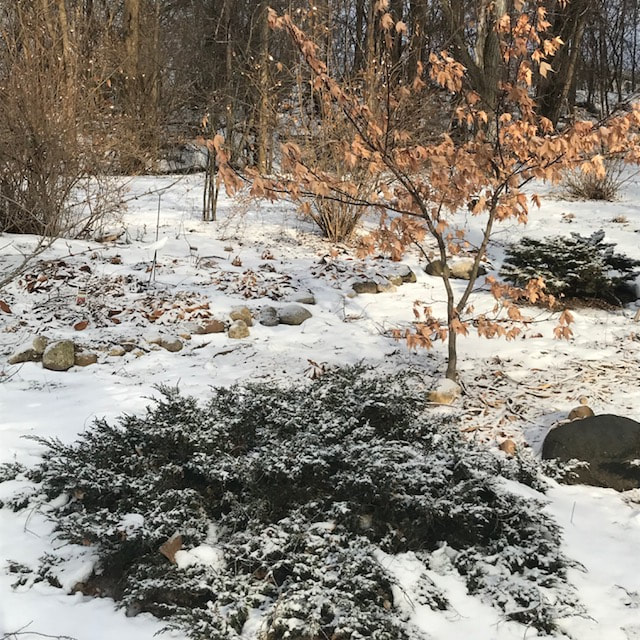 Combining perennials with conifers and small, ornamental trees is guaranteed to look captivating through the changing seasons. Low-growing evergreens, like this Juniper, are often ignored when designing an area. They are easy to walk right by at the garden center, but look how great the green needles look dusted with snow in the photo above. Here it is planted near a Coral Bark Japanese Maple whose fall leaves are still clinging on making it an even prettier picture. Rocks that edge a bed of Lenten roses (Helleborus) mark a compelling pathway. 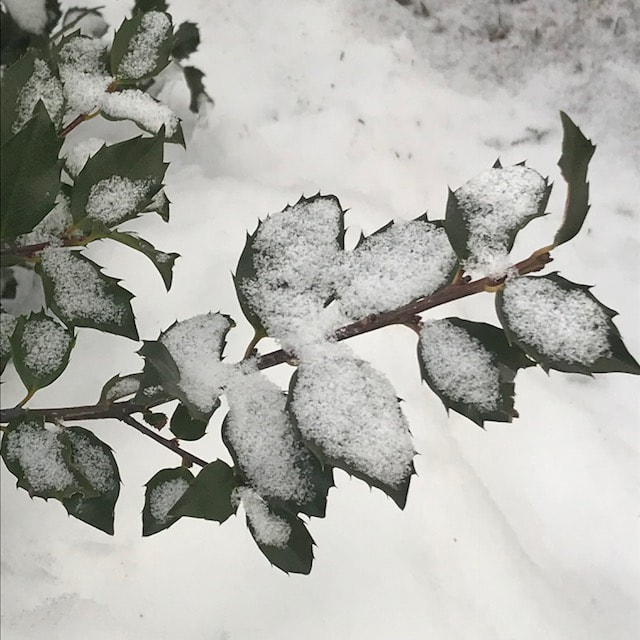 If you just can't bring yourself to add evergreens into your landscape, then consider broadleaf varieties. Holly (Ilex) ,shown above, and boxwoods, shown below, are two ways to add year-round green and provide living structure. And no need to prune them unless you want to! Boxwoods on this property are rarely pruned unless a branch gets overly rambunctious and throws off the overall look of the plant.  When choosing trees to bring into your plant communities, consider what they have to offer during the winter months. The gnarly branches of the Harry Lauder Walking Stick (Corylus avellana 'Contorta'), in the photo below, are at the top of my list as is the bark of birch trees and Seven Sons tree (Heptacodium miconioides ). 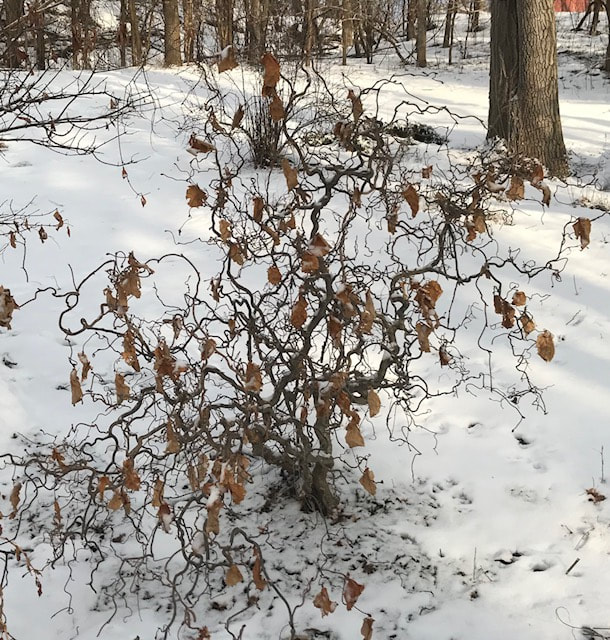 Winter will give us another fresh blanket or two of white before letting Spring have her way. Seize the opportunity to look at your landscape with a critical eye and find ways to increase Winter's interest. Taking a photo of an area can help see more objectively and you'll notice more details. If you need ideas and suggestions, bring your photo in to us here at Burlington Garden Center and take advantage of our landscape design service. We're here to help make your gardens the best they can be - even in winter.
Tracy Hankwitz Horticulturist and General Manager of Burlington Garden Center 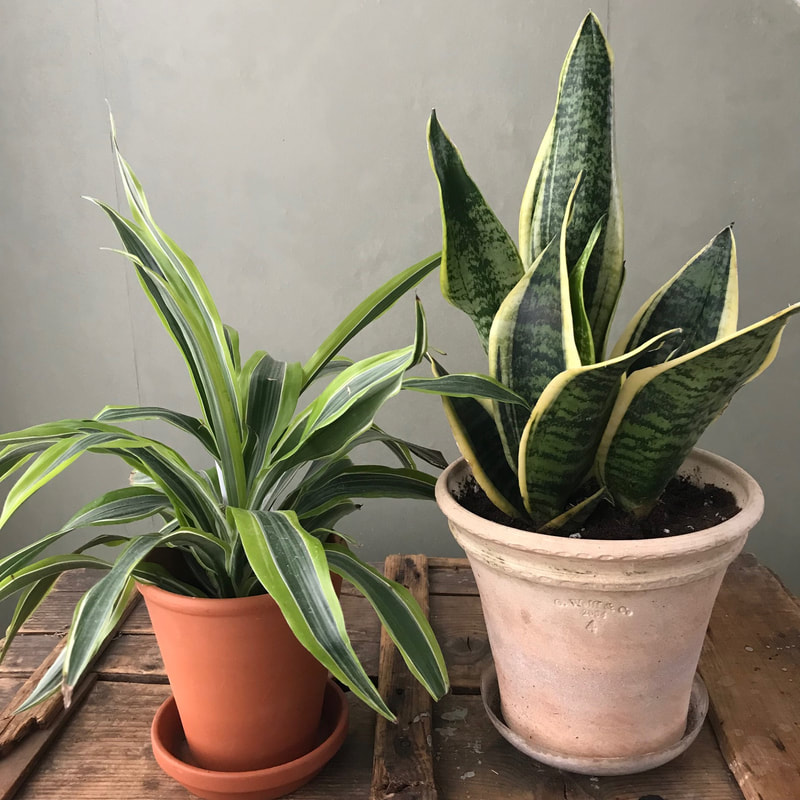 Cold and flu season is upon us as are long stretches of sunless days. To fight off illness and depression, take an active approach to cultivate natural remedies into your lifestyle. Following are a few suggestions: Houseplants Surround yourself with green medicine - houseplants. All indoor plants have the ability to purify the air to a certain degree, but some are more beneficial than others, removing up to 90% of toxins from the air. By adding a 10-12” size plant for every 100 square feet in your home, it will make a difference. Try these easy-to-grow plants for starters.
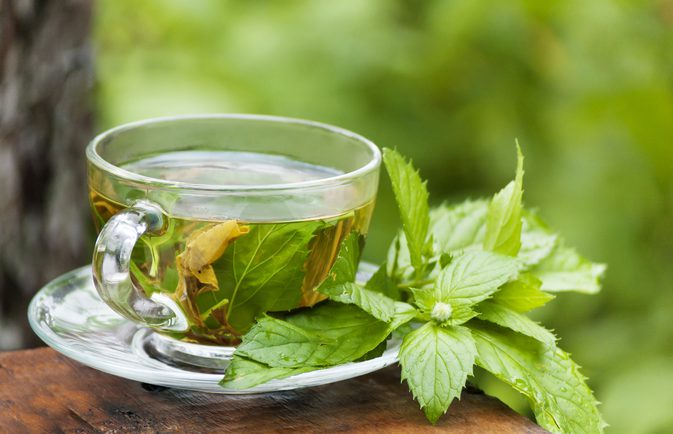 photo credit: livestrong.com Herbs Another plant family known for its health benefits is herbs. Used in teas and essential oils, these natural remedies are worth learning more about. For example, did you know peppermint can soothe headaches, relieve sinus pressure, and calm an upset stomach? Lemongrass aids digestion, regulates high blood pressure, and helps cold symptoms. Lavender, marjoram, sage, garlic, ginger . . . the list goes on. Start planning which ones you will grow this year. 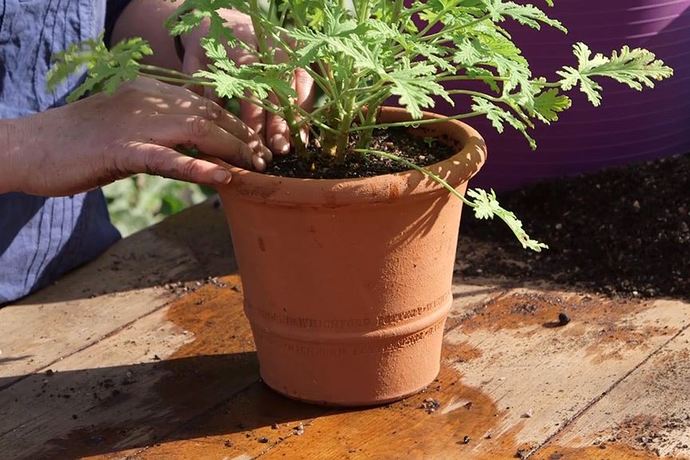 photo credit: gardenersworld.com Playing in the soil
As you pot up those herbs and houseplants, you will probably notice a lift in your spirits. Recent studies have shown that soil bacteria can act as antidepressants, boost immune systems, and increase learning abilities. So digging in the dirt is an act of wellness, too. Growing your own vegetables is another way to increase exposure to those beneficial soil bacteria as they may be contained in the food – that’s a good thing! Whether you take a houseplant to the office, end the day with a cup of herbal tea, explore the use of essential oils, or just play in the dirt, make this a year of cultivating wellness the natural way. Start by attending our Gardeners' Retreat on Saturday, February. 17 where the focus is this very topic! Learn more at www.burlingtongardencenter.com. Tracy Hankwitz Horticulturist and General Manager of Burlington Garden Center 1/18/2018 1 Comment And the Award Goes to . . .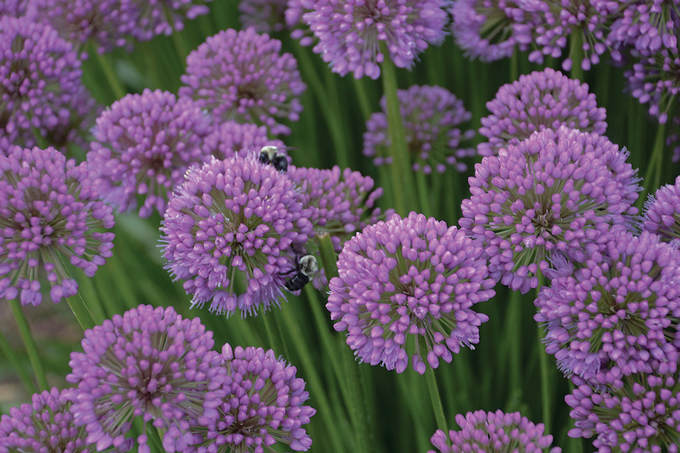 Perennial of the Year - Allium 'Millenium' The ornamental onion has long been used in the garden for it's whimsical purple globe-shaped flowers. Though it shares the same family name as the common chives, most ornamental onions used in the landscape are sterile and will not spread prolifically by seed. From the hundreds of Allium varieties, the Perennial Plant Association has named A. 'Millenium' as the 2018 Perennial of the Year. Developed by Mark McDonough, fondly known as the onion man, 'Millenium' has neat and tidy mounds of shiny, deep green foliage. In mid summer, a profusion of rose-pink globes will attract butterflies to your yard. Alliums in general are deer and rabbit resistant, love the sun, and mix well with other perennials and ornamental grasses. * 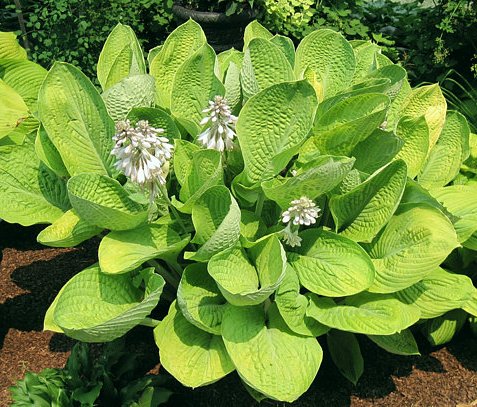 photo credit: hostalibrary.org Hosta of the Year 'World Cup' Hosta 'World Cup' has been deemed worthy of this title for 2018 by the American Hosta Growers Association. This golden-colored hosta has deeply-cupped, wavy foliage that reaches upright to the sky. It grows 23" tall and 43" wide. It's pale purple flowers make an appearance in late June. Plant H. 'World Cup' with other shade lovers such as a fine-textured fern and varietgated hosta varieties. * 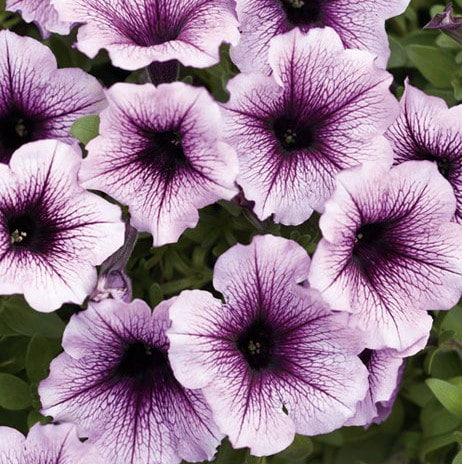 photo source: pinterest.com Annual of the Year - Supertunia 'Bordeaux' For all of you annual lovers, Proven Winners has not let you down with their 2018 pick: Supertunia 'Bordeaux'. It's floriferous, mounded habit makes this petunia perfect for containers, hanging baskets, or in the landscape. Planted in full to part sun it will attract butterflies and hummingbirds. 'Bordeaux' is also heat and drought tolerant and requires no deadheading. It is perfectly happy in its own container, but looks stunning with deep purple lantana and the chartreuse leaves of the sweet potato vine. * 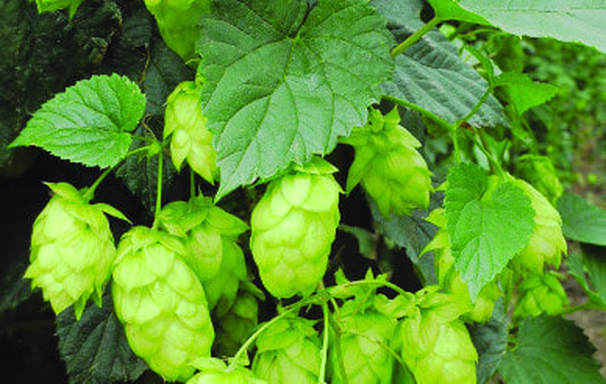 photo credit: richters.com Herb of the Year - Hops
Rounding out our stellar performers is the award-winning herb, Hops, Humulus opulus, chosen by the International Herb Association. Hops are useful for more than beer-making. For ages it's shoots and roots have been used medicinally having a natural sedative quality. It's also an attractive ornamental vine. Some varieties can grow 25' in one season making it useful for providing a shady spot in which to relax. * Tracy Hankwitz Horticulturist & General Manager of Burlington Garden Center |
Search by typing & pressing enter