
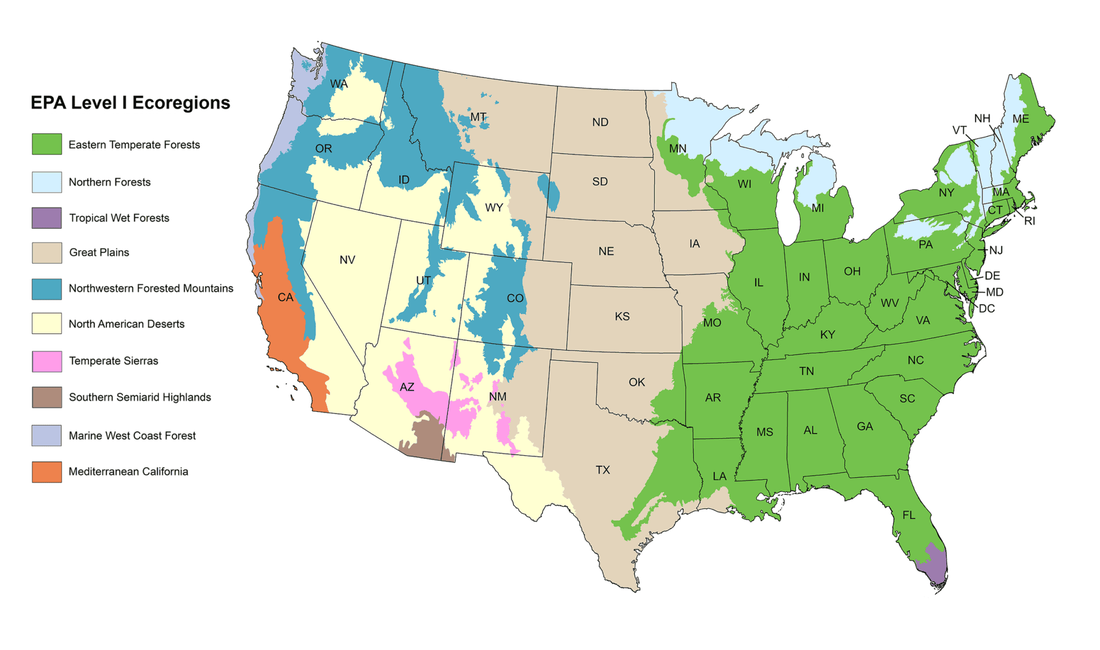
 Ecological gardening is a new way to think about gardening. At its core, it strives to mimic and restore our local ecosystems. It’s the art of growing gardens that are suited to our area. It’s also a different way to choose plants that we grow. Instead of selecting plants that only please us, it’s intentionally seeking plants that will support wildlife that already lives in our ecosystem, sustaining it through the four seasons.
So what is an ecoregion? Simply put, an ecoregion is a large area of land containing distinct characteristics allowing natural communities and species to grow. According to the map above, we are in the Eastern Temperate Forest ecoregion which covers quite a large area of the country. Because this ecoregion covers so many states and different hardiness zones, it is broken down into smaller eco regions. Click here to see this map. We are in Level III ecoregion 53, and to be more specific, Level IV 53b. Totally confused? Keep reading. Why garden by ecoregion? Plants are not bound by state lines when it comes to their natural habitats. Using ecoregions as a guide, we can make smarter plant choices. Not only will these native plants have a better success rate, better plant health, and better performance, they will support our local wildlife. The goal in gardening ecologically is to garden with plants best adapted to our locale and the wildlife that is here. If you’d like to read more on this topic, here is an interesting blog post by Doug Tallamy. Next week we will focus on growing the right plants for our spaces, and our series will continue each week addressing the following ecological practices:
Watch for an opportunity to continue the conversation in person here at Burlington Garden Center coming soon.
0 Comments
Leave a Reply. |
Search by typing & pressing enter