
Burlington Garden Center
  • HOME
  • ABOUT US
  • LEARN
  • CONTACT
  • EVENTS
  • GIFT CARDS
  • BGC BIRD CLUB
  • REWARDS
  • HOME
  • ABOUT US
  • LEARN
  • CONTACT
  • EVENTS
  • GIFT CARDS
  • BGC BIRD CLUB
  • REWARDS
Search by typing & pressing enter

YOUR CART

2/20/2024 0 Comments

Using Natural Fertilizers
Picture
Ecological Gardening Practices
Part 5 Using Natural Fertilizers


‘Adopt the pace of nature’ - Ralph Waldo Emerson

Over the past month, we have covered several eco-gardening topics: discover your ecoregion, growing the right plants, keeping your soil covered, and attracting beneficial insects. If you implement all these practices but are still using synthetic fertilizers, weed killers, and pest controls on your lawn, vegetable gardens, and landscape, you are negating all your positive efforts. 

Most synthetic products can damage the beneficial microorganisms in the soil. If your soil is healthy, its teaming with beneficials that are doing all the work that a fertilizer would do. They help convert nitrogen from the air into the soil making it a usable form of food to the plants. They help decompose dead plant matter into what the plants need. By continually using synthetic fertilizers on our lawns, edible gardens, and landscapes, we lose this important natural ecosystem, and the plants come to depend on us. This makes more work for us!

Here are alternatives that mimic a natural ecosystem . . . 

  1. Leave the leaves where they fall. Just like in a forest, the fallen leaves feed the soil microbes and nourish the plants.  There are pros and cons to mulching them vs. leaving them whole. Perhaps mulch those that fall on the lawn which allows them to break down faster and feed the turf slowly. Leave the leaves in the ornamental beds where they act as a natural mulch saving you a lot of money, and they feed the soil as they break down.  
  2. Turn those leaves into black gold by composting them and applying to the gardens in fall, spring, and just before planting a new vegetable crop. 
  3.  Chop & Drop. As you cut back dead foliage of perennials this spring, cut them into short pieces and leave them right there. This uses the plant to basically feed itself. 
  
Other options: 

  1. Use decomposed chicken manure or other animal manure as compost. 
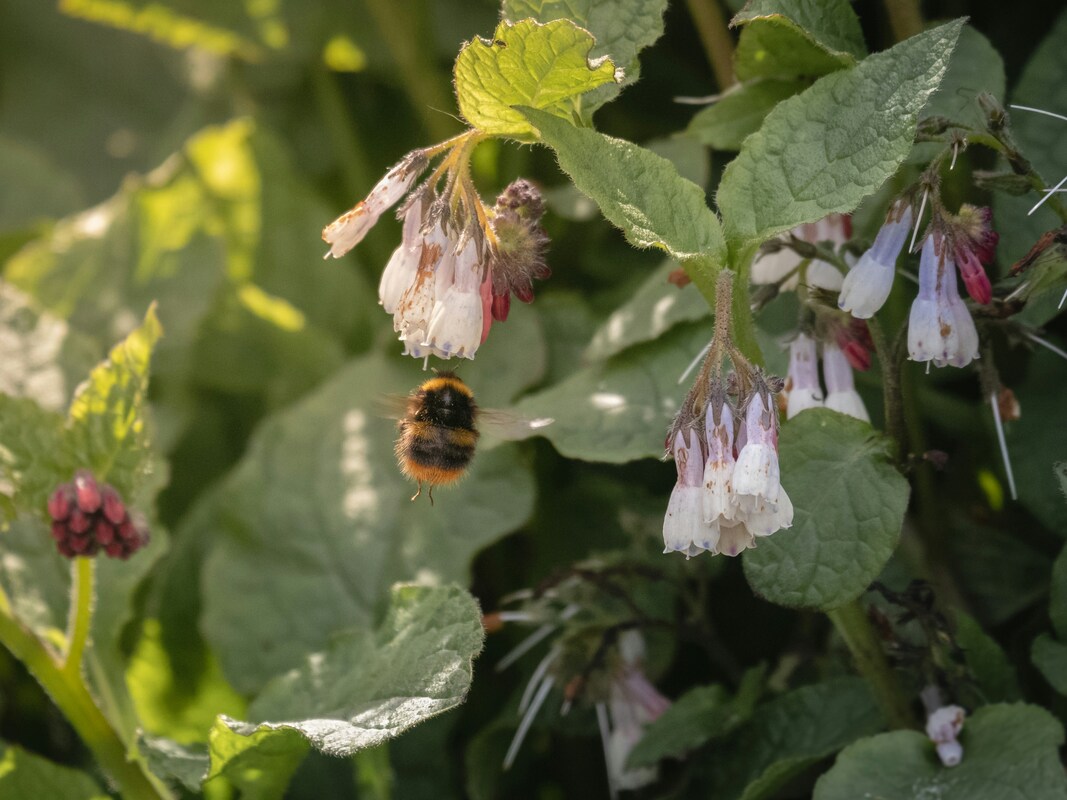
  2. Make a liquid compost tea or a plant tea using comfrey. Learn more here.
  3. Use fish emulsion as a foliar spray to feed the plants or as drench to feed the soil. This is great option for in the vegetable garden. 
  4. Grow a cover crop. 

As we make the switch from synthetic to natural, we must realize that we can’t rush Mother Nature. Natural pest solutions and fertilizers take time. They work, but they work on their own time table because they are establishing a healthy ecosystem. In a culture that wants to see results quickly (think same-day Amazon delivery), we need to ‘adopt the pace of nature’, slow down, and let nature do the work for us.

If the thought of giving up a green, perfect lawn is something you just can't do cold turkey, then consider easing your way into a more natural approach. Here are three tips:
 

     1. Switch to a natural lawn fertilizer like Milorganite. Apply it in Spring or ideally in Fall. 
     2. Fertilizer less frequently. 
     3. Reduce the size of your lawn and add native plants. This will reduce the amount of fertilizer and water inputs right away!  

That wraps up our eco-gardening series. If you want to learn more, mark your calendars for Saturday, March 23. Naturalist, Beth Goeppinger will be here presenting ‘Planning Your Native Landscape’.  You can also check out the links below. 

LINKS: 
Homegrown National Parks
Native Plant Finder
Natural Fertilizers to Improve Garden Soil

​
0 Comments


Leave a Reply.


      Want to learn more about gardening? Sign up for our newsletter. 

    Subscribe to Newsletter

    Categories

    All Annuals Bulbs Composting Container Gardening Cutting Gardens Design Ecological Gardening Food Gardening Gardening Herbs Hydrangeas Native Natives Perennials Planning Pollinators Roses Seed Starting Shrubs Soil Tools Vegetables Vertical Gardening Vines Water Features Wildlife

    Archives

    February 2024
    January 2024
    February 2021
    August 2020
    June 2020
    April 2020
    March 2020
    February 2020
    January 2020
    October 2019
    September 2019
    August 2019
    July 2019
    April 2019
    March 2019
    February 2019
    December 2018
    October 2018
    June 2018
    May 2018
    April 2018
    March 2018
    February 2018
    January 2018
    April 2017
    March 2017
    September 2016
    June 2016
    May 2016
    April 2016
    March 2016
    February 2016
    January 2016
    October 2015
    September 2015
    August 2015
    July 2015
    June 2015
    April 2015
    March 2015
    February 2015
    January 2015
    December 2014
    October 2014
    August 2014
    June 2014
    May 2014
    April 2014

STORE INFO

5205 Mormon Road
Burlington, WI 53105
262.763.2153
SERVICES

Speakers' Bureau
JUST FOR FUN

Plant Lists
Return Policy